
The author is a Biblical researcher and Editor of the ‘Tomb of Jesus’ website, recently interviewed for Paul Davids’ film – ‘Jesus in India’, first aired on the Sundance Channel.
For centuries the three Abrahamic faiths, Judaism, Christianity and Islam, have responded differently to the person of Jesus Christ(as). Their views and responses to Jesus(as) vary in many areas and they interpret many events in his life differently.
The Crucifixion is the most controversial event in the life of Jesus(as). The accounts of the events of the Crucifixion in the Abrahamic faiths are completely at odds with each other. What took place at the Crucifixion, and the events that immediately followed, has divided people, often bitterly, since the 1st Century.
Jewish Viewpoint
The viewpoint of the Israelites at the time of Jesus(as) was straightforward; had he been put to death on the cross and successfully executed by the Romans, his messianic claims had come to nought. He was a failed Messiah and could not have been the one they awaited. In an age when Jewish rebellions were frequently crushed by the Romans [e.g. the Aquaduct Riots early in the reign of Pontius Pilate], Jesus(as) had become another statistic.
To this day the Israelites still await their true Messiah. A very visual and graphic symbol of their plight is the public prayers offered at the ‘Wailing Wall’, thought to be part of the Second Temple Mount rebuilt by Herod the Great in Jerusalem. The wall has been given this name based on the reports of 19th century European travellers who often referred to the wall as the “wailing place of the Jews”1. It is also referred to as a place where the Jews come to mourn the destruction of the Second Temple, which took place around 70CE. Over 3000 years since Moses(as), the Jews have still not accepted a Messiah, although a few minority Jewish groups do accept Jesus(as) as their Messiah.
Christian Viewpoint
The following Biblical verse shows the importance of the Crucifixion and Resurrection in Christian theology; it is taken from one of the letters of St Paul found in the New Testament:
‘…and if Christ has not been raised, then our preaching is vain, your faith also is vain…’2
The Christian stance on the Crucifixion is that through Jesus’ death and his subsequent Resurrection mankind has been saved from the Original Sin of Adam and Eve. This event is the central aspect of the Christian doctrine of Atonement, a key Christian belief. In the BBC Documentary “Did Jesus Die?” Friar Jerome Murphy O’Connor emphasises the importance of the Crucifixion and Resurrection. He comments on the Resurrection by stating it:
“.. is absolutely fundamental to the Christian faith and I have no doubt that it will always be so…”3
Islamic Viewpoint
In the 7th Century CE, when Islam emerged from the Arabian Peninsula, the position of Jesus(as) emerged as a heavily stressed and repeated subject in the Holy Qur’an. We find mention of Jesus(as) in the Qur’an 25 times and an entire chapter of the Qur’an is dedicated to his mother, Mary(as) (Chapter 19 – Sura Maryam).
The verses in the Qur’an pertaining to the Crucifixion are clear in their strong denial of Jesus’ death on the Cross. Yet, the exact manner in which this happened has been interpreted differently. Indeed the prevalent orthodox Islamic view, that Jesus(as) was not placed upon the Cross but rather lifted to the heavens while a substitute took his place, is but one in a range of views of what took place.
The Qur’an addresses the Crucifixion by stating that the Jews did not kill Jesus(as):
And their saying, ‘We did kill the Messiah, Jesus, son of Mary, the Messenger of Allah;’ whereas they slew him not, nor crucified him, but he was made to appear to them like one crucified; and those who differ therein are certainly in a state of doubt about it; they have no definite knowledge thereof, but only follow a conjecture; and they did not convert this conjecture into a certainty… (Ch.4:V.158)
Yet the verse that follows has been interpreted in two very different ways:
On the contrary, Allah exalted him to Himself. And Allah is Mighty, Wise. (Ch.4:V.159)
The orthodox view is that Jesus(as) was lifted bodily to the heavens. Other scholars have interpreted this as meaning that Allah exalted Jesus(as) in stature, by saving him from an accursed death on the cross.
Jesus(as) Surviving the Crucifixion
The view of Hadhrat Mirza Ghulam Ahmad(as), the Promised Messiah and Mahdi, is that Jesus(as) did not die during the Crucifixion, but survived the ordeal. When read in this light the Qur’anic verses put forward a more rational and far less supernatural meaning. Also when using this interpretation, we can, finally, reconcile the narrations in the Qur’an with the Biblical accounts and see that they are telling the same story.
The idea of Jesus(as) surviving the Crucifixion is not a new one. The idea, known in scholarship as the ‘Swoon Theory’, has been known in scholarly circles since 1780. In modern times these ideas have gained more acceptance and coverage in academic circles and in documentaries and films.
Elaine Pagels
Professor Elaine Pagels, Professor of Religion at Princeton University, comments on this theory stating:
“There are many versions of that story, one came up in a book years ago called The Passover Plot which suggested that he had been sedated on the cross, that he was removed quite early and therefore could well have survived, that is certainly a possibility.”4
This is the only viewpoint based on which both the Qur’an and the Bible can both be correct in their narration of the events. There are many clues within the New Testament that Jesus(as) survived the Crucifixion [see The Muslim Herald, Special Issue, Vol.18, No.6, June 1978.]
Dr. James Tabor
In this same BBC documentary, Dr. James Tabor, Chair of the Department of Religious Studies at the University of North Carolina, throws more light on the events that took place 2000 years ago:
“When you look at the story of Jesus and how he was executed by the Romans, he’s on the cross for six hours, the assumption is that he’s dead. The Roman soldiers check the body. There were two others crucified, according to the Gospel accounts and they broke the legs of those to hasten their death, because the Sabbath day was coming. When they came to Jesus they said he’s already dead. Presumably his body is motionless and he’s quit breathing. They then prepare the body and put him in a tomb and presumably its all sealed up, and he’s dead for all practical purposes – the question though is, is he clinically dead?”
Dr. Tabor goes on to explain that a better translation for the term ‘Resurrection’ would in fact be ‘resuscitation’. He further explains this point by stating:
“We do have stories both from the modern world and the ancient world, where people appear to be dead and for all practical purposes they are dead – that is they are not responding to the outside world – but then they do in fact revive or come back. We call it resuscitation, but if you want to press the language, that would be Resurrection.”
It should be stated here that Dr. James Tabor himself does not hold the opinion that Jesus(as) did in fact survive the Crucifixion. Dr. Tabor is clear on this in his book, The Jesus Dynasty, and in personal correspondence, that his belief is that Jesus(as) died upon the Cross rather than survived the event:
“Some have suggested that Jesus might not have been clinically dead but that he fell into some type of comatose state from which he subsequently recovered… I think we need have no doubt that given Jesus’ execution by Roman crucifixion he was truly dead.”5
This may in part be to do with Dr. Tabor’s internationally publicised research on a 1st Century tomb in Jerusalem known as the Talpiot Tomb and known more popularly as ‘The Jesus Family Tomb’. Comment on this tomb is outside the scope of this article.
Holger Kersten
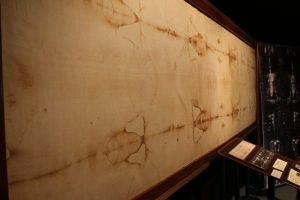
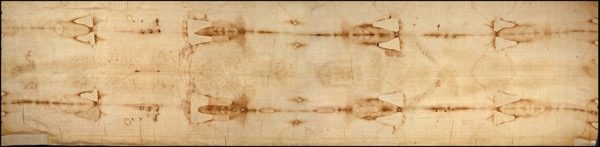
Another theologian who has written about this idea is German scholar Holger Kersten. Kersten is best known for his book The Jesus Conspiracy that boldly states that the Shroud of Turin is living proof that Jesus(as) did not die on the Cross and its dating was deliberately sabo-taged by the Catholic Church to cover up this fact. This material will be picked up in a future article, but some of Kersten’s research on the Crucifixion is worth looking at here.
Kersten highlights several inter-esting factors in the Crucifixion supporting the idea that Jesus(as) survived. One piece of analysis done by Holger Kersten, along with his co–author Elmar R. Gruber, focuses on the description of Jesus’ burial and tomb chamber. Kersten and Gruber quote the Gospels to support their thesis; that the burial of Jesus(as) was never completed:
‘Jesus was not deposited in a chamber cut perpendicularly into the rock wall of a tomb, but set down on a stone surface or open ledge. On the morning of the ‘resurrection’, Mary Magdalene sees the ‘angels in white’, as they are called, ‘the one at the head, and the other at the feet, where the body of Jesus had lain’ (John 20:12). Jesus was not deposited lengthways in to a kôk, for if he had been, no one could have sat at the head end…
…John tells us that Jesus’ favourite disciple ran to the grave (20:5) and ‘stooping down, and looking in’ saw the linen clothes. Mary Magdalene ‘stooped down and looked in to the sepulchre’ (20:11), and saw the two ‘angels’ at the place where Jesus had lain… these statements support our assumption that the burial of Jesus was not completed. If he had already been lying in a kôk, the place would again not be visible from the tomb entrance.’6
Following this, Kersten and Gruber analyse the description of hundreds of pounds of aloes and myrrh used upon the body of Jesus(as), brought by Joseph of Arimathea and Nicodemus. They talk of the medical properties of these herbs, which Hadhrat Mirza Ghulam Ahmad(as) talks about in detail in his book Masih Hindustan Men (Jesus in India). Hadhrat Mirza Ghulam Ahmad(as) explains how these herbs were used to produce a special ointment that was subsequently given the name Marham-i-Isa (Ointment of Jesus(as)).
Islamic Scholars on the Crucifixion
Two modern Muslim scholars who have come out in support of the ‘swoon theory’ are Ahmed Deedat and Shabir Ally. Both these scholars do not accept the claims of the Ahmadiyyat Muslim community and Hadhrat Mirza Ghulam Ahmad(as), yet they both openly support the viewpoint that Jesus(as) survived the Crucifixion, going against the prevalent orthodox Islamic belief.
Ahmed Deedat
The late Ahmed Deedat wrote a book entitled, Crucifixion or Cruci–fiction, in which he argued in favour of the view that Jesus(as) did not die upon the cross, but survived the Crucifixion. Deedat presented the usual arguments that are presented in favour of the swoon theory (such as the short duration of the Crucifixion, the Sign of Jonah(as), and Jesus(as) eating and drinking afterwards). In addition to this Deedat also includes a unique collection of stories from the media of people having had resurrection-like experiences:
‘1. Little girl who “died” tells how she came back to life (After 4 Days) – (“Daily News” 15/11/55).
2. Man died for two hours still lives – “Miracle” amazes doctors – (Sunday Tribune, 27/3/60).
3. He died for 4 minutes – Man’s heart stops but he lives on – (Sunday Express, 23/7/61).
4. He does not know that he died for 90 seconds – (Cape Argus, 16/3/61).
5. Dr. Hitge returned from the dead – (Cape Argus, 4/5/61).
6. The coffin moved – Young man narrowly escaped being buried alive – (Sunday Tribune, 13/5/62).
7. Back from the dead – After being thought dead for 2 days – (Post, 25/7/65).
8. “Corpse” winks at undertaker – Doctor wrote out a death certificate – (Daily News, 25/3/75).
9. “Clinically dead” – Toddler alive after hour–long revival battle – (Natal Mercury, 5/12/82).
10. Was he dead or alive? – The dilemma facing transplant Doctors – (Sunday Tribune, 17/7/83).
11. Shaken and stirred – Declared clinically dead “from too much Christmas liquor” – (Daily News, 3/1/84).’7
Ahmed Deedat was highly regarded for his Christian-Muslim dialogue and public debates. His uncompromising style brought him many supporters from a variety of Islamic schools of thought as well as detractors.
Taking a viewpoint that seems to support the Ahmadis will of course draw attention and criticism from both Muslims and other Christians. One such criticism was from Mohammed Bana of South Africa:
‘Mr Deedat is fond of making lectures about other deno-minations, but very seldom on Islam. He seems to have a fixed notion about Jesus’ crucifixion. In his lectures, he hardly gave the Islamic viewpoint, or seldom the Christian viewpoint, thus confusing his audience. I believe he likes to make the Qadianis of this country very happy by mostly giving their viewpoint that Jesus, after being put on the Cross, swooned. Now why should Mr Deedat tell his audience that Jesus was put on the Cross and he swooned, because nowhere does the Qur’an speak of Jesus being put on the Cross and swooning? Mr Deedat is the only person who can tell us whether he is preaching either the Christian doctrine, the Muslim doctrine, or the Qadiani doctrine.’8
Other direct criticism comes from John Gilchrist, a Christian apologist and one of the authors of the website ‘Answering Islam’. Gilchrist writes:
“We have never ceased to wonder why Ahmed Deedat continues to promote the theory that Jesus was indeed crucified but came down alive from the cross. Our amazement arises from two considerations. On the one hand, this idea is held to only by the heretical Ahmadiyya sect in Islam and is denounced by all true Christians and Muslims.”9
Shabir Ally
Shabir Ally is the President of the Islamic Information and Dawah International Centre based in Toronto, Canada. Shabir Ally has a BA and an MA in Religious studies and is currently studying for a PhD as well as being an Imam and presenter of a weekly TV show entitled ‘Let the Qur’an Speak’.
In previous debates with many famous Christian scholars, Shabir Ally had taken the position that Jesus(as) was never placed upon the Cross, but someone else was crucified in his place. More recently, however, in public debates, Shabir has changed his usual approach and position in support of the Ahmadi view that Jesus(as) survived the Crucifixion.
For Christians, it is an angle of attack against the scholar: why would the scholar in question come out in favour of a viewpoint supported by a sect considered heretical by orthodox Muslims? During a question and answer session following a talk at the University of Toronto, Christian Apologist, Tony Costa Junior, put this exact point to Mr Ally. Despite Shabir explaining that he did believe in the physical return of Jesus(as) and rejecting the claims of the Ahmadis, that Hadhrat Mirza Ghulam Ahmad(as) fulfilled the prophecies of the second coming of the Messiah, he openly admitted:
“I have looked at the reports that are generally followed by Sunni Muslims, under-standing that someone else was substituted for Jesus(as) on the cross, and I have seen that although there are a variety of reports, the commentators cannot agree precisely on what has happened here and how exactly a substitute was given. And it appears that they are following reports which originated in Iraq, according to an excellent analysis done by Neal Robinson, who’s a Muslim now, in his book Christ in Islam and Christianity… There was a plot to kill him but they neither killed him nor crucified him, crucified him in the sense of killing him by crucifixion. That is a definition that has been given in Tafsir-Ul-Qur’an by Abdul Majid Daryabadi, which is a Sunni Tafsir on the Quran. So I am well within my ranks and I haven’t changed positions on that, but perhaps interpretations.”
In my own correspondence with Shabir Ally, he explained to me his viewpoint in the following words:
“For Sunnis the end of Jesus’ career is a mystery. The traditional interpre-tation of Quran 4:157 has been almost universal in saying that someone else was on the cross. But some modern interpreters are willing to accept that what was really meant was that Jesus did not die on the cross. It seems to me that this latter approach is more likely to be correct.”
Having said this he was quick to add:
“Years ago I read the book Jesus died in Kashmir and more recently the book Jesus lived in India. I must confess that I do not find these convincing. The belief that Jesus survived the cross does not mean for me that he made his way out of Palestine. I do not profess to know what eventually became of him.”
Despite openly distancing himself from the claims of the Ahmadiyya Muslim community and the Promised Messiah(as), Shabir Ally has openly declared that his position on the Crucifixion is in exact keeping with the views expressed by the Promised Messiah(as) and held by Ahmadi Muslims.
The Prophecy of the ‘Breaking of the Cross’ in the Latter Days
The symbolism of the Crucifixion and specifically the ‘Cross’ is interestingly mentioned specifically in Islamic tradition in relation to the ‘second coming’ of the Messiah. In Sahih Bukhari (collection of sayings and traditions of the Holy Prophet Muhammad(saw)) a number of times it is stated that the coming Messiah will ‘break the Cross’:
‘Narrated Abu Hurairah: ‘Allah’s Apostle said, “The Hour will not be established until the son of Mary descends amongst you as a just ruler, he will break the cross, kill the pigs, and abolish the Jizya tax. Money will be in abundance so that nobody will accept it (as charitable gifts).”’10
The Islamic orthodoxy today will have us believe that this is a prophecy about a literal quest that will be undertaken to break all crosses. The fourth caliph of the Ahmadiyya Muslim community, Hadhrat Mirza Tahir Ahmad(ru), highlights how ridiculous a notion this is when taken fully literally:
‘He will start by launching his campaign against Christianity. His strategy will be to break every cross in the world, whatever material it is made of. He will visit every cathedral, every monastery, every church, every temple, every Christian hermitage. He will walk every street of every township and stare at every passer-by in search of any cross.
Ladies perhaps will become the prime object of his scrutiny because he will be aware of their despicable habit of having crosses engraved upon their jewellery and ornaments. He will take care of the fact that they also wear crosses hanging around their necks. Thus he will snatch away every bangle, every bracelet, every pendant and earring with the sign of the cross upon it. Woe to the ladies who dare to cross the path of that Jesus(as) , but where can they escape and hide, the poor defenceless wretches?
He will enter every house and search every cabinet and jewellery box. Every wall and every corner will be scanned. Crosses must be literally broken and wiped out from the face of earth. Until he has accomplished this task to the full he will not rest in peace. This is the vision of the Muslim orthodoxy of the mission of Jesus Christ(as) if ever he returns to earth.’11
The explanation of what this prophecy actually means and alludes to has been given to us in detail by Hadhrat Mirza Ghulam Ahmad(as) and the ongoing fulfilment of this prophecy has been seen in our very lifetimes.
The Promised Messiah(as) on the ‘Breaking of the Cross’ states:
‘This Hadith does not mean that the Promised Messiah would kill the Kuffar and break crosses: rather, the breaking of the Cross means that in that age the God of Heaven and Earth would bring out the hidden reality which, all of a sudden, would smash the whole structure of the Cross….
…In accordance with the old promise he appeared as the Promised Messiah. Then there came the time for the breaking of the Cross, i.e. the time when the error of the creed of the Cross was to be made plain like the breaking in two of a piece of wood. So now is the time when the Heavens have opened the way for the breaking of the Cross, so that a seeker after truth may look around and search for the same’12
Conclusion
In our modern time, an age of digital satellite communication, the Internet and wider spread religious freedoms, the doctrine of the Crucifixion and the ‘creed of the Cross’ is being questioned in ways it has never been before. Many television stations are showing documentaries and films presenting evidence that the Christian belief on the Crucifixion and Resurrection is incorrect.
The most recent of these documentaries is the 97-minute feature film ‘Jesus in India’ produced and directed by Paul Davids13. Focusing on the question of where Jesus(as) spent his life between the ages of 12 and 30, the investigative trail leads the film’s explorer, Edward T Martin, to India and eventually the Rozabal tomb in Kashmir. The film also explores ideas around Jesus(as) having survived the Crucifixion.
After almost 2000 years of confusion and mystery over the events of the Crucifixion, and the life of Jesus(as) that followed, a detailed explanation and analysis was presented by Hadhrat Mirza Ghulam Ahmad(as). Combining fresh divine revelation with scholar-ship, crossing many religions and cultures, Hadhrat Mirza Ghulam Ahmad(as) shone an illuminating light on these events. His book Masih Hinudstan Men (Jesus in India) laid the ground work for research that is carrying on to this day, examining evidence around Jesus(as) travelling to India. This text is accepted by scholars as the first text on this subject to link the life of Jesus(as) in Palestine, and his surviving the Crucifixion, with his travels to the East and eventual burial in Srinagar, Kashmir.
There is much debate in the scholarly world still regarding all this material, yet we are seeing that the scholarly work of one man from the small village of Qadian in India has now reached a worldwide audience in our lifetime and those who are openly opposed to Islam Ahmadiyyat are also starting to admit the truth of some of the community’s most hitherto controversial beliefs and bold assertions.
This lifting of darkness and confusion around the position of Jesus(as) is summarised by the Promised Messiah(as) stating in his book Jesus in India:
‘But now, darkness is no more. Night is gone and now it is day. Blessed is he who remains deprived no longer!’ (Jesus in India, Ch.4)
References
1. Modern Jerusalem, City of the Great King, James Turner Barclay, (1858), Challen, pp 493.
2. Bible, 1 Corinthians 15:14
3. ‘Did Jesus Die?’, BBC4/ Wild Planet Productions.
4. ibid.
5. The Jesus Dynasty Dr. James Tabor, Harper Element, London 2006, pp.203.
6. Jesus lived in India, Holger Kersten, Element Books, London 1991, pp.166–167
7. Crucifixion of Crucifiction, Ahmed Deedat, Islamic Book Services, 2001, Chapter 9 – ‘Ressurections Daily!”
8. Mohammed Bana, Allegations Confirmed, p.3.
9. The Crucifixion of Christ: A Fact, not Fiction, John Gilchrist, p.9
10. Sahih Bukhari, Volume 3, Book 43, Number 656, 3:23:425 and 4:55:657 and Sunan Abu Dawud (book 37, number 4310)
11. Revelation, Rationality, Knowledge and Truth, Hadhrat Mirza Tahir Ahmad(ru), Islam International Publications Ltd, Tilford 1998, Part 7, Section 3.
12. Jesus in India, Hadhrat Mirza Ghulam Ahmad(as), Islam International Publications Ltd, Tilford 1989.
13. Official website: https://www.jesus–in–india–the–movie.com

Add Comment