
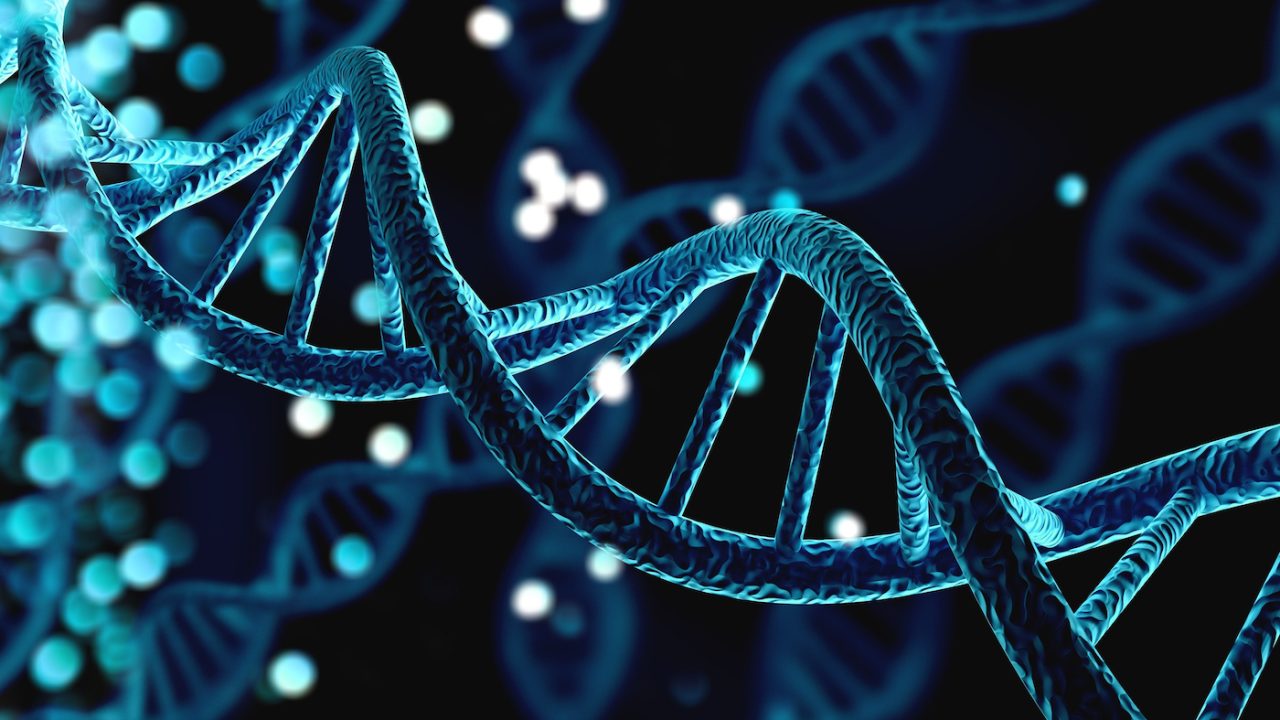
© Shutterstock
Zafar Nausherwaan, Germany
We’ve all read books or seen movies set in dystopian worlds, where secret underground labs have developed unconventional treatments for post-apocalyptic diseases. Imagine vast halls filled with large tubes containing humanoid figures that suddenly become conscious, able to feel and think like humans. While such scenarios remain in the realm of fiction, there are scientific advancements that are real, remarkable and worth discussing: Organoids, tiny models of human organs replicating many functions of their full-sized counterparts.
An organoid is a miniature version of an organ, grown in vitro in three dimensions, that faithfully mimics key functions and structures of its full-sized counterpart. Organoids are tiny, three-dimensional clusters of cells that proliferate in a lab dish and behave like miniature human organs, such as the liver, pancreas, and intestines. In other words, they act as mini-organs—stand-ins for full-sized ones—used in research to study biology and disease more accurately than two-dimensional cell cultures. [1]
Scientists start by harvesting stem cells – special cells that can become almost any other cell type in the body. [1] Under carefully controlled conditions (specific nutrients, growth factors, and a supportive three-dimensional matrix), these stem cells self-organise into structures that mimic real organs. Over time, they form various cell types found in the organ of interest, recreating its basic architecture and function.
You might wonder: why develop organoids when you can work with flat, two-dimensional cell cultures? Three-dimensional organoids allow us to study diseases and test new treatments with far greater precision, because they recapitulate the complex architecture and cell-to-cell interactions found in real tissues. Flat cultures grow cells in a single layer, missing many important features of living organs; organoids restore those features, making lab results more predictive of human responses.
By growing organoids from a patient’s own cells, researchers can test different therapies in the lab – reducing guesswork and avoiding unnecessary side effects. For example, doctors can harvest a small sample of a patient’s tumour, derive mini-tumour organoids, and screen various chemotherapy drugs to find the most effective regimen for that individual’s genetic profile. This personalised medicine approach cuts down on trial-and-error, delivering treatments tailored to each patient’s unique disease. [2, 3]
Because organoids come from human cells, they also offer a more ethical alternative to animal testing – and they often predict human drug responses more accurately. Researchers can screen medicines on human-like tissues, sparing animals from experiments and speeding up the path from lab discovery to clinical trials. As protocols improve, organoids may one day repair damaged tissues or even grow whole organs for transplant—offering hope to patients with chronic or terminal diseases and those waiting for donor matches in registries worldwide. [4, 5]
Over the years, organoids have already led to major scientific breakthroughs that demonstrate their power. For instance, nerve organoids are being developed from a patient’s own tissue, grown in the lab, and then transplanted back to repair damaged nerves – offering solutions to conditions once deemed irreversible. Similarly, brain organoids may one day restore lost functions in certain neurodegenerative diseases or severe brain injuries by replacing lost tissue. [5]
Organoids also help scientists advance cancer research. By growing patient-derived mini-tumours, researchers can test multiple drugs in parallel to see which chemotherapy regimen works best for that person’s tumour mutations. This approach allows doctors to predict the most effective treatment, reducing harmful side effects and avoiding months of ineffective generic therapies. [3]
Although organoids are simplified models of human organs, they face challenges that limit their use in current medical care. First, they lack blood vessels and immune cells, so cells in the centre can starve or fail to show how an organ responds to infections or inflammation. Other supporting cells found in full organs are also missing, so organoids cannot fully mimic living tissue complexity [1,4], e.g., brain organoids lack a proper blood–brain barrier, making it difficult to model certain neurological conditions accurately. Finally, developing and storing organoids requires specialised equipment and trained staff, which increases cost and limits access to this technology in many labs.
Organoids are set to become even more powerful than they are today, thanks to ongoing technological advances. Advances in “organ-on-chip” systems—where microfluidic devices supply nutrients and oxygen—alongside efforts to add blood vessels and immune cells into organoid cultures, [2,6] will make these models more lifelike and reliable for research. Another exciting frontier is “organoid-based intelligence,” an emerging field that aims to develop biological computing devices using 3D cultures of human brain cells. While human brains process information more slowly than machines, they excel at handling complex, uncertain data – offering potential advantages over electronic systems for certain tasks. [7]
In short, organoids offer a powerful window into human biology, allowing researchers to study diseases, test treatments, and explore regenerative therapies more effectively and ethically. As protocols become more standardised and accessible, these mini-organs may soon be as common in hospitals as imaging machines – providing personalised insights and new hopes for patients with life-threatening conditions.
About the author: Zafar Nausherwaan graduated with a Master of Science in Biology at the University of Ulm, Germany. He has a strong commitment to the life sciences and a passion for research.
ENDNOTES


Add Comment