
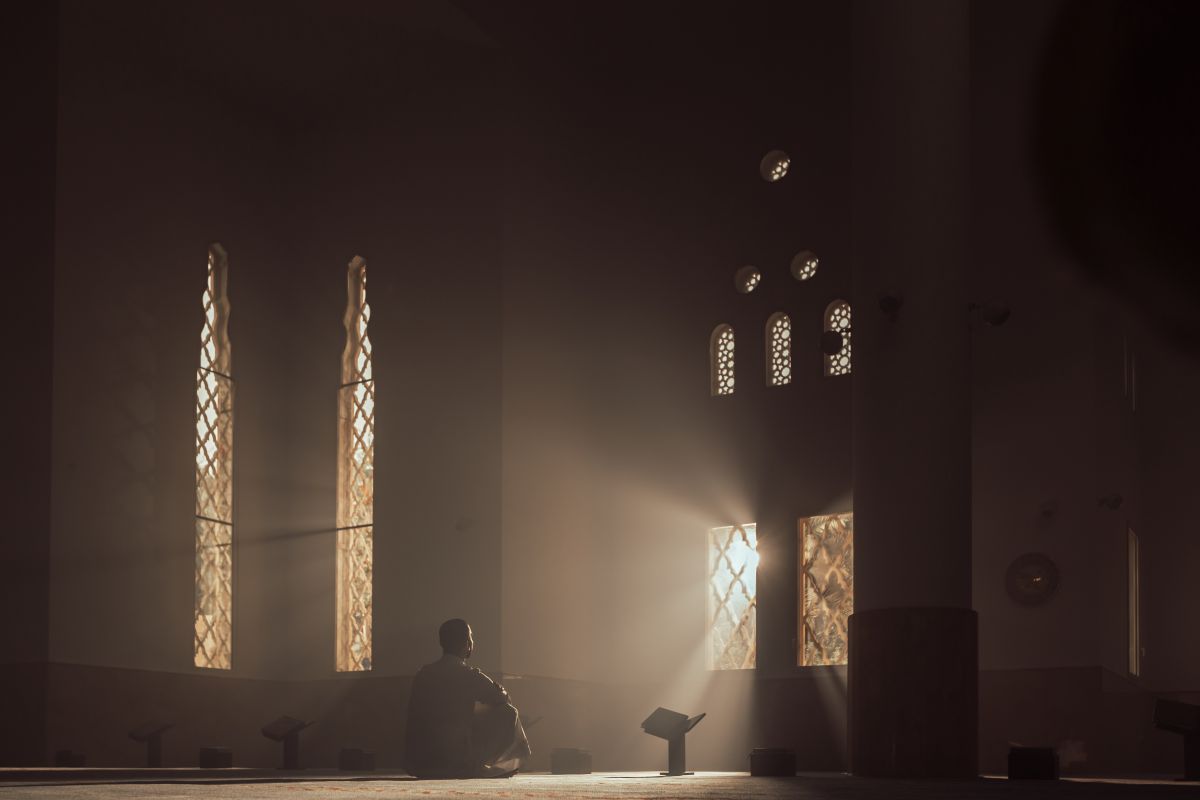
© Shutterstock
Tariq Mahmood, Toronto, Canada
I’m hypoglycaemic, so could you tell me how I should adjust my fast? I don’t want to mess up.’
As a Muslim, I had asked my Christian friend to fast with me during the month of Ramadan, when Muslims abstain from all food and drink from dawn until sunset. But that injunction is for those who are healthy, so I quickly responded, ‘Oh, that’s fine then, you don’t have to fast.’
But my answer confused him. I realised that he didn’t know Islam prohibits anyone who is sick from fasting – it doesn’t allow a person to risk their health. But that raises the question of what those who don’t fast can do in the month of Ramadan, and what a day in the life of a Muslim – whether fasting or not – looks like during this sacred month. While many non-Muslims know about the practice of fasting, the Ramadan day changes in more ways than that. During Ramadan, there is increased emphasis on prayer, completing an entire reading of the Qur’an and setting aside extra funds for chariy. Many Muslims are not just giving up food, but also sleep, whether they are praying the nighttime Taraveeh prayers in community at the mosque, or waking up in the middle of the night to pray before their pre-dawn meal. And instead of pursuing other leisure activities, they will also be trying to complete one entire reading of the Holy Qur’an during the month. In short, whether or not one is fasting, Ramadan is a busy month.
How does Ramadan work, and what does fasting entail? Before explaining a fast, it’s important to note that Ramadan is still observed without fasting.
A Ramadan When You Can’t Fast
When fasting was first commanded, one of the first rules was:
‘Whoso among you is sick or is on a journey shall fast the same number of other days; and for those who are able to fast only with great difficulty is an expiation – the feeding of a poor man.’[1]
According to Islam, one of the primary purposes of Ramadan is to create sympathy for the poor. Ask any Muslim: when those hunger pangs hit, their first thought is often, ‘there are people who must fast out of necessity, not choice.’
So, if the sick cannot fast, how does Islam try to create sympathy in their hearts? For those who cannot fast at all, Islam replaces their fasting with the feeding of a poor person. ‘I’ve never been able to fast.’ Aleem is a type 1 diabetic; every year, he experiences Ramadan with the baggage of not being able to fast – still, Ramadan holds a very special place in his heart. ‘Instead, I observe Ramadan by focusing on prayers, patience, charity and keeping myself focused on God.’ Despite not being able to fast, Aleem becomes more charitable, a quality shared by millions of Muslims.
For Muslims, not being able to fast can often be mentally difficult. Muslims crave Ramadan, which is an annual reset for them.
‘One of the more delicate challenges was gently advising some of the older members to forgo fasting’. So says Qasim Choudhary, a missionary in the Marshall Islands, a tiny, remote country in the Pacific Ocean. The Marshall Islands has one of the highest rates of type 2 diabetes, Qasim says, a fact that makes his job uniquely hard.
These Muslims in a remote Pacific island showcase the love that Muslims have for Ramadan, but also serve ‘as a powerful reminder that Islamic concessions are themselves a mercy and that neglecting them can lead to harm rather than spiritual benefit,’ says Qasim.
Despite the immense love that Muslims possess for Ramadan, life gets in the way. Sometimes it is maladies, but other times it is miracles, like that of bringing life into this world.
‘Ramadan has always been special to me, but my first one while pregnant was a struggle,’ says Qanita, a devoted mother of two. Pregnant (and breastfeeding) women are prohibited from fasting so as not to affect their child’s health, but for many it is the first time in years (or even decades) that they are experiencing Ramadan without the fasting. Add to that the nausea, bodily pains and the emotional stress of feeling left out.
‘I felt frustrated at times because it was a big change to get accustomed to, but I found comfort knowing that Allah understood my struggle.’ Qanita later visited the worldwide head of the Ahmadiyya Muslim Community, His Holiness Hazrat Mirza Masroor Ahmad (aba), and asked his advice regarding these feelings. He immediately lifted the burden from her shoulders, reminding her that in Islam, Muslims rely on God to help them:
‘[He said] I should do my best as a mother, but no matter how deeply we love and care for our children, it is God Who takes care of them and nourishes them, and without His grace, nothing is possible. Hearing his answer shifted my perspective.’
When she was blessed with another pregnancy during Ramadan, everything was different this time around: ‘I let go of the pressure of thinking Ramadan had to feel the same way it did before motherhood’. This pregnancy during Ramadan helped her realise that ‘God’s mercy meets us exactly where we are.’
Allah honours pregnancy in the Holy Qur’an by stating that a mother’s badge of honour is that ‘she bears him in weakness upon weakness’ and that in this respect, God has venerated our mothers to a very high spiritual status.[2]
Muslim Mornings in Ramadan
Muslims are commanded to pray five times a day throughout their entire lives, but ask any Muslim, and they’ll tell you that the pre-dawn prayer – called Fajr – is the most difficult. It is a shared reality for many Muslims, that they struggle to pray five times a day.
‘I’m not entirely consistent on the five daily prayers…my goal will be to not miss a single prayer for Ramadan’ says Ahmad, a young Muslim from Hawaii. Many Muslims share this struggle, but Ramadan offers a unique opportunity to get back on track and excel in faith.
This is why mornings in Ramadan focus on prayer: a person who dedicates the first few hours of their day to worship not only develops discipline, but also gains uninterrupted time to concentrate on prayer.
Indeed, in Ramadan, Muslims are commanded to strive beyond their regular prayers. For many, that means waking up for the Tahajjud prayer – which involves getting up even earlier, before the pre-dawn meal, to spend time in extra prayers. And after the dawn prayers, many Muslims often spend extra time reciting and studying the Holy Qur’an, since many strive to complete one entire reading of it within the month of Ramadan.
All of this happens while it’s still dark outside, and so for Muslims, the morning becomes an incredibly spiritual time: they go from prayer, to eating, back to prayer, and then reciting the Holy Qur’an. Intense, yes, but rewarding too.
A Day in the Life
Every Muslim’s day looks different during Ramadan. Teachers will leave early in the morning for school and will struggle from parched throats as they teach their students. Doctors might feel weak from visiting their patients. Academics may feel lightheaded from the intense mental strain. Parents will be exhausted from taking care of energetic children who don’t have to fast.
‘Some days you manage everything beautifully; other days you barely scrape through.’ Adeel fasted all four years during medical school. The ‘nomadic life’ of a medical student (as he describes it) means that every Ramadan looks different:
‘Some rotations had early morning starts where I’d rush through Suhoor half-asleep, then spend the day on my feet in hospitals trying to learn while managing the fatigue.’ Adeel describes night shifts where he’d have to sneak away for five minutes to break his fast, or work throughout the voluntary morning prayers, but as he puts it, ‘you simply try your best with the sincere intention that Allah knows your capacity and effort’.
Despite such a variety of experiences, many aspects of Ramadan are ubiquitous: every Muslim has to offer the Zuhr or afternoon prayer. As the day progresses, those fasting will feel the hunger more often, but also incline more towards prayer due to their weakness.
Basil, a non-Muslim who fasted with The Review of Religions as part of a social experiment two years ago, described this feeling as ‘low power mode’: ‘You realise what your most essential functions are.’ She shared an insight that I, a born Muslim, had never considered: Ramadan offers a chance for humans to recognise what they don’t need.
Close to the Finish Line
Muslims then offer the Asr prayer, which takes place a few hours before sunset.
Throughout the day, Muslims focus on reciting the Holy Qur’an. You may find them with small versions of it in their pocket, or on their phone’s Qur’an app. Reading their holy scripture serves to provide valuable lessons that God has imparted on humanity: things like being kind to neighbours, taking care of the poor, and above all, praying and thanking God.
Muslims may get home from work some hours before sunset, and begin preparing their Iftar or post-sundown meal to break the fast. The struggle of cooking whilst fasting – of craving all the food one can eat but building discipline and honouring their faith – is a feeling Muslims know all too well.
Many Muslims will then venture to the mosque after preparing food to listen to lectures, and then sit and break their fast amongst brothers and sisters in faith.
Day Turns to Night
All the patience during a fast doesn’t end here: no, Islam prescribes a very specific timetable when sundown hits: When it’s time to open the fast, Muslims are commanded to eat only a little and then offer the Maghrib [sundown] prayer. This actually stops many people from ravenously consuming food and teaches a great deal of humility: at the end of it all, Islam tells you to eat a little, drink some water, and focus your attention back towards God Almighty.
After this prayer, Muslims who are at the mosque go home and enjoy their second meal of the day. They sit amongst family and share their bond of Ramadan together. For many Muslims, this moment grants the most relief in a fasting day.
Then Muslims prepare for the final prayer of the day: Isha, which is offered some hours after sundown. After this prayer, mosques offer a voluntary prayer known as Taraweeh, consisting of eight units of prayer. These prayers are often longer, because those leading prayers will recite much longer portions of the Qur’an. Some mosques even finish the entirety of the Holy Qur’an within the 30 days of Ramadan. After these prayers, they then go home.
A day in the life of a person celebrating Ramadan is complete. Everything comes to an end the same way it began: with spirituality, prayer, and reflection.
This is Ramadan, the month that almost two billion people are anxiously awaiting. While the routines of Ramadan can be physically taxing, the spiritual rewards more than make up for it.
………………………………………………………
About the Author: Tariq Mahmood is a missionary of the Ahmadiyya Muslim Community in Canada and serves on the editorial board of The Review of Religions.
ENDNOTES
1. The Holy Qur’an, 2:185.
2. The Holy Qur’an, 31:15.


Add Comment