
Disclaimer: This is not a political commentary on Gaza’s history or geopolitics. It is a spiritual and philosophical confrontation of the deepest question Gaza has ripped open before us: if God exists, how can He allow this? This series begins at the origin story of that question — exploring the nature of free will itself.
Sabahat Ali, USA
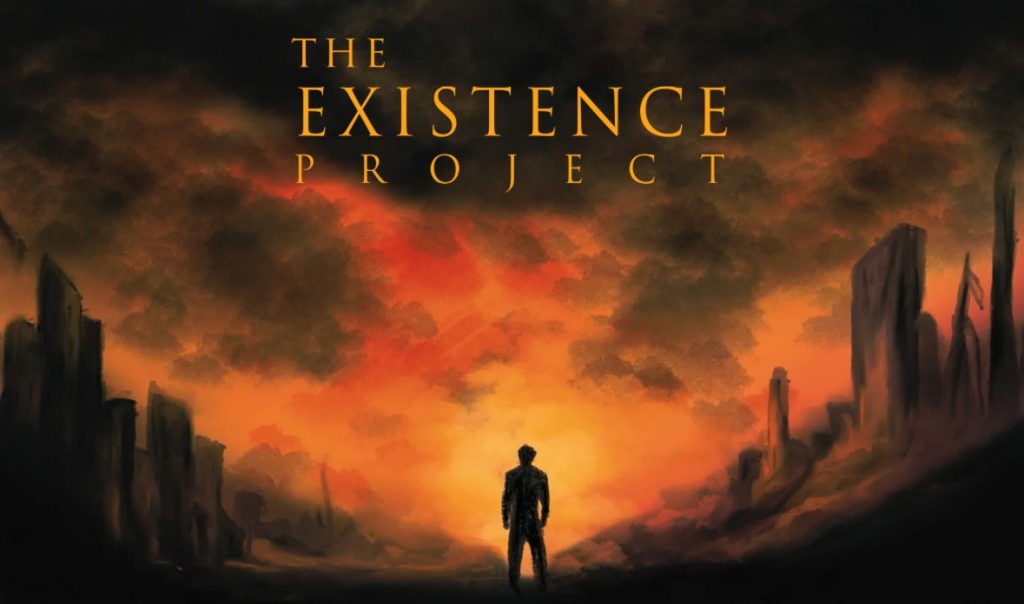
Original Art by Rija Ahsan, USA
Chapter I – The Myth of Divine Blame
Why Gaza is More Than Meets the Eye
Somewhere between the glow of our screens and a chill in our bones, the world is waking up.
What happened in Gaza ripped open the question of suffering with all the brutality of the human condition. It laid bare the moral fragility of a civilisation marching boldly toward its own ruin.
It’s a genocide that will be written upon the walls of history in the blood of innocent children, with people like you and me trapped behind glass screens, forced to watch the madness from a phone.
The monstrous attempts to erase the Palestinian people have shaken our global consciousness awake.
And while those with the power to end the barbarity slept soundly at night upon their blood-stained pillows, the once muffled whispers of the masses, after decades, finally found a voice.
Why We Don’t Understand Our Own Crisis
In recent times, I don’t think I’ve gotten a more emotionally charged question than about Gaza. It erupts from the deepest part of our souls and pulsates in the caverns of our conscience. Yet, as the ancient Arabic idiom goes, “Asking the right question is half of knowledge.”
And this is no ordinary question.
I believe that the question of Gaza will be analysed by future historians, philosophers, lawmakers, and academics as the turning point for modern civilisation.
The UN Human Rights Rapporteur for Palestine, Francesca Albanese, verged on revelatory when she observed: “The genocide is the epilogue of a tragedy foretold.”
If the French Revolution toppled monarchies, the Industrial Revolution mechanised us, the Cold War divided humankind into technological hemispheres, then Gaza did something greater still: it forced humankind to collectively confront whether we are morally fit to survive at all.
We, humans, stand cognitively at the summit of the evolutionary world. Why then, despite every cognitive superiority, does the disgraceful distance between our conscience and our cranium seem greater than ever before?
Before delving into the nucleus of the issue, we need to consider a bit of historical context.
A Note on the Birth of Modern Atheism
The 19th and 20th centuries created the ideal conditions for a crisis of faith.
When Darwin’s theory of evolution in 1859 boldly challenged long-held assumptions about the age and origins of life, the cracks of distrust within the scientific community began to widen. The two world wars showed people how power and victory were inescapably linked to scientific progress.
Paired with the infectious curiosity of science communicators like Carl Sagan, inspiring a generation tired of the Church’s inability to keep up with reason, secularism quickly rose as the West’s preferred refuge against Christianity and organised religion.
Meanwhile, the medieval attitudes of extremism that emerged in parts of the Muslim world – a gross departure from Prophet Muhammad’s (sa) peaceful teachings – left many Muslims and non-Muslims alike disillusioned, confused, and understandably frustrated.
Before long, the corruption of certain religious clergy in the church, combined with the shell-shock of 9/11, spawned a powerful aversion toward organised religion and, ultimately, toward the concept of God Himself.
Thus, what follows carries historical sympathy for how we got here.
The occasional sharp tone serves only to cut through the thick fog of falsehood. But rest assured that beneath it flows the same milk of deep heartache that you and I share about the wounded state of our world.
The Question That Will Define Our Species
The eyes of those demanding answers for Gaza brim with tears of sincerity.
When people ask me ‘Where is God in all of this? Why is He allowing Gaza to live in this brutish hellscape? Where is the mercy of The Most Merciful God?’ I realise we face two realities in one: how far we have drifted from a true understanding of our Creator, and how immeasurably vital it is to give sincere people an answer they deserve.
The question is phenomenally important.
The fact that we dare to ask it is proof that there is still hope.
But first, we need to pull back the heavy draping of the materialist framing around suffering layer by layer.
The Free Will Paradox: Why Denying That We Have Choice Destroys all Meaning
Most of the outrage around this question stems from our failure to identify how suffering can come about in the first place. The discussion begins with establishing whether we are free to make our own choices or not – what most refer to as the question of free will.
How much free will we have determines the sphere of our responsibility. It is foundational in ascribing value to life itself.
What is the difference – if any – in the value of the rocks that preceded life and the struggle for survival that followed? Aren’t they just variations of pre-hardwired atoms at the end of the day?
Are we only byproducts of a mindless machine, prisoners of pre-destiny? Or do we write our own story?
Answering these questions also helps us understand the nature of God Almighty’s intervention in human affairs – including what divine intervention actually means.
It is only then that we can begin to deconstruct the wider issues attached to why evils like genocide are allowed by a Merciful God to happen at all.
At the heart of the most central theological errors in major world religions (and atheism) sits mankind’s failure to understand how free will operates and the concept of accountability that emerges from it.
Human beings operate under what may be best described as sapient free will: our capacity to make morally meaningful decisions within the limits that God has set according to Divine wisdom.
The Determinist Delusion: Why We Are Not Just Puppets
I do not refer to free will as the mere illusion of choice generated by an otherwise indifferent, robotic universe.
That view is deeply dangerous and intuitively untrue, for it evacuates any sense of responsibility from the city of our actions by imagining that our actions are not ours to begin with. If my actions are not my own, then why should I be accountable for them?
This strips from the human experience any true sense of accountability. Can you blame a duck for being a duck? What about a murderer for being a murderer?
It is between these two sorts of questions that lies the debate around free will. Why is it that we say a chimpanzee has killed his fellow chimp, but when talking about humans, we murder each other?
There is something intuitively true about our heightened ability to differentiate between right and wrong that orients all human affairs and pegs us in the soil of accountability – a standard to which we do not hold other species.
The First Extreme: Hard Determinism
But the consequences of determinism in its purest sense are as dangerous as they are false, for they ultimately divest even the worst criminal of any true moral accountability—no matter how egregious his crime—by arguing that his actions could not have been otherwise.
Philosophers like Galen Strawson famously argued that we humans do what we do because of the way we are – that we have not set the parameters of our free will or chosen the foundation that underlies them from which these parameters arise.
Essentially, neither did we have a say in what led up to us, nor do we truly have a say in what steps we take in the world.
I was exposed to matcha by a force beyond my control, acquired a taste for it, and that is why I choose matcha over coffee (sorry – I promised the editors this series wouldn’t get too controversial).
So the question is: how can my choice really be “free?”
This view was popularised for the general public by names like Sam Harris, who adds that our choices, intentions, efforts, and even reasoning are just part of a chain of causes that precede our own conscious awareness.
How can I be held responsible for the trauma that led me toward my own destructive behaviours?
And at a more fundamental level, why should I be morally accountable for actions governed by the laws of physics, biology, and events that preceded me, over which I had no control?
The Problem With Hard Determinism
But try telling that to the parents of a victim of child abuse or to the husband who lost his wife in a DUI accident. We as humans intuitively demand justice, seek improvement, and aspire toward growth because we know it is possible and real. Our blood boils when we learn that someone betrayed us because we know it could have been otherwise.
Our lived experience rejects hard determinism. We make real choices, weigh competing options, and genuinely regret decisions, demonstrating that we know we had a choice.
It’s why Islam calls true repentance and reformation half of the journey toward God.
A huge part of this debate is whether or not our decisions could have been different.
But let’s lend a soft ear to the hard determinist for a second. From his perspective, maybe you couldn’t have gotten into any other university than the one you got into. Perhaps your physiology really does peak at a 7-minute mile and no more.
Seems reasonable enough. Right?
The problem emerges, though, when we begin to apply that logic to other things.
After all, moral accountability is not linked to your VO2 Max. It’s linked to what you do with it.
Islam does not deny human limitations – in fact, it articulates human weakness and fragility in the same breath as Divine power for this exact reason: because we must seek to rise above our weaknesses through Divine help.
But more of that later.
For now, let’s allow the hard determinist’s vision to play out for a moment.
Consider the following statements: “I was meant to commit identity theft. I grew up watching my mother do it, it couldn’t have been any other way.” Or “I was bound to kidnap and dismember those children because my childhood conditioned me to enjoy death and blood while craving power.”
If these actions truly could not have been otherwise, then, despite the illusion of making free choices, we technically don’t have free will, because the alternative option never really existed.
But human psychology loudly testifies against this.
If we truly believed that such people are simply products of prior causal forces over which they had no control, and that they did not make any decisions of their own at every step, then the very categories of criminal and victim lose their moral meaning, for both are reduced to mere products of preceding causes over which neither had any ultimate control.
But this merely pushes the question back one step.
Even if our actions arise from a chain of prior causes, the present decision remains one of the links in that very chain. Our reasoning, conscience, intentions, and choices are not somehow outside causality; they are themselves causal realities that shape everything that follows.
To reduce them to mere illusions amputates one of the most consequential links in the series of contingent events. Of course, this is not what hard determinists set out to say – it’s just what the philosophy in practice ends up saying for them.
The Argument From Reversals
For instance, we go to great lengths to reverse the negative effects of regrettable actions.
Remorse is half the proof for free will in psychology. The other half is reformation. It’s why few things inspire us more as humans than someone who turned their life around.
The woman who overcame addiction to save her marriage. The son who left a life of crime. The father who lost 100 pounds and became healthy to be there for his kids.
The great reversals in life carry even greater weight than those who simply excelled from day one – because we understand the messiness and struggle of self-improvement, and the tenacity it takes to pursue it anyway.
Here, hard determinists would argue that people who make grand U-Turns in life were always meant to turn their lives around.
But that reduces their undeniable efforts, sacrifices, and toil – not to mention the millions of decisions they had to make to actualise their transformation – to the unfolding of prior causes rather than truly chosen moral triumphs.
If prior causal forces determine the trajectory of our life events, then we must call every effort against evil and toward good another blind and unintentional link in the chain.
It requires us to deny all the volcanic effort that it takes to overcome addiction. To carry on living after the love of our life dies. To continue hoping after life disappoints us.
It asks us to deny the thunderous internal war that we wage every day to become better than we were yesterday.
The Other Extreme: Radical Freedom
But there’s also the other extreme – what philosophers call libertarian incompatibilism.
This posits that we are so at liberty in our choices that no form of determinism is true in any sense.
Where hard determinists argue that everything is decided beforehand, Libertarian Incompatibilists acknowledge that humans have agency and do indeed decide a great deal of what we do and become.
Libertarian incompatibilism claims that free will is true and not ultimately determined by prior causal conditions.
It also suggests that for any choice that someone makes, it could have been otherwise – that if I choose salted caramel over cherry, I genuinely could have chosen cherry.
And so, our biology, genetics and circumstances do not ultimately determine our choices.
But there is a formulation of this worldview that takes this fair stance to the extreme.
While libertarian incompatibilism rightly rejects everything being decided for us, some of its most famous proponents, like Robert Kane, have hyperbolised the sphere of human free will to the extent of calling us the ultimate creators and sustainers of our own ends and purposes. (Robert Kane, The Significance of Free Will, Oxford University Press, 1996)
This veers into another deeply problematic direction, for our decisions are the result of a combination of deeply complex constraints thrust upon us and powers we invariably possess.
The relationship between one’s socio-economic standing and one’s inclination to steal, for instance, or the dictatorial regime one is born into, and one’s inclination to wage violence to escape it, are cases in point.
Libertarian incompatibilism cannot truly provide a satisfactory answer beyond acknowledging what is immediately apparent about any given situation.
This is because it does not factor into the existential equation an All-Knowing God who will appreciate the incalculable nuance behind every choice and possesses the power to punish or reward accordingly.
No one chooses to be born versus not be born, nor selects their natural hair colour and height, who their parents are, or where they are born, or into which race or religion, and certainly not the physics of the universe they occupy.
Hence, both extremes – hard determinism and libertarian incompatibilism – when applied to real life, are at least partially incompatible with conventional human wisdom and rejected by observation.
There are obvious limits to how free we humans can be – but they are certainly wide enough for us to choose freely between justice and genocide.
Two Astrophysicists Walk Into A Bar…
In recent times, philosophy and physics have become friends. Joined at the hip, in fact. Philosophers increasingly have a great deal to say about why particles behave the way they do, and what that means for life’s deepest questions.
So it’s hardly surprising that the last 50 years of breakthroughs in physics have gravitationally pulled the free will debate into the arena of quantum fluctuations and probability equations.
And while this isn’t the time or place to unpack the implications of quantum indeterminacy, the discussion would be woefully incomplete without at least acknowledging the role of physics in free will.
Physics offers no definitive conclusions about free will.
But that doesn’t mean it doesn’t have some very important things to add to the discussion.
Recently, two famed astrophysicists on opposite sides of the quandary– Neil deGrasse Tyson and Charles Liu- drew millions in as they dissected the subject from the latest physics.
At the beginning, Tyson expresses that he doesn’t think we have free will, while Liu pushes back that it’s not that simple. After tussling with examples that range from movies and Greek mythology to people born into poverty or those congenitally susceptible to addiction, the two sharpen each other’s views and come to an evolved middle ground:
“If we find a point of agreement,” concludes Tyson (who began by rejecting free will), “it’s that inside the perimeter of our ignorance, we recognise there are forces operating against free will – our physiology, our neurochemistry and physics. Surely that perimeter may grow. But it’s possible that there’s a limit to how far it will grow beyond which we have to admit the existence of free will. OK. I’ll give you that.”
Tyson finally concedes: “It doesn’t have to be absolute in one direction or another.”
Liu responds by saying, “I’m OK with that. There’s uncertainty in the universe. I embrace it.”
Gaza: Between The Physics & The Phenomenon
Naturally, someone may ask what subatomic uncertainty has to do with the bloodbath and war crimes in Gaza.
Believe it or not, it has everything to do with it.
Determining whether we are simply prisoners of particles or scribes of our destiny (and to what extent) will shape the future of human moral clarity.
If physics establishes that the choices we make are simply an illusion conjured by randomness or deterministic law, then the categories of guilt and innocence, justice and genocide – good and evil – no longer exist.
And that’s why physics doesn’t just give us insight into the atrocities in Gaza (or, for that matter, the horrors in Sudan and Myanmar) — these humanitarian black holes also give renewed gravity to physics.
When we look at the implications of physics through the lens of our own crises, it transcends a description of matter and becomes a meditation on why anything matters.
Thus, it’s important to note what Neil deGrasse Tyson also conceded earlier, that ‘we recognise there are forces operating against free will – our physiology, our neurochemistry and physics.’ And if that is an argument for why our free will is limited, then the opposite is also true – if there are forces that we can use to exert our influence on pre-determined forces, then we have free will to that extent.
But what is that extent?
From Particles to People: Between Intuition & Instinct
Our biological hardwiring invites us through urge and instinct, but our conscience intervenes on whether or not to accept the invitation.
If evolution has trained us to express rage in a moment of competition for a mate and we end up hurting someone, then our conscience will intervene to pull back our hands and even rebuke us for the inflicted damage.
Even if our response was disproportional – too violent or harsh – we normally regret it with proportional intensity.
Our animal instinct cannot rule us entirely because it is constantly at war with our higher self – our conscience – which not only has the power to resist but to dominate it.
If absolute determinism were true, then the forces that oppose it could exist only as predetermined impulses, not exist in a way that preserves the lived reality of a self that must answer between competing calls: lower impulses like greed and higher voices like guilt.
But it is this exact war within the human condition – between the wild thoroughbred of our animal self and the noble rider who seeks to tame it – that we wage to achieve inner and societal peace.
The Middle Path of Islam: Between Causality & Freedom
Islam charts a middle course – one where human decisions and divine architecture are not foes, but ingredients that give rise to both meaning and morality. ‘Whoso does right, it is for his own soul; and whoso does evil, it will only go against it. And thy Lord is not at all unjust to His servants.’ (Holy Qur’an 41:47)
This issue sits at the centre of Gaza’s beating heart.
We cannot get anywhere without first establishing whether we can influence things or not. If everything is decided a priori, then we’ve no hope of altering it, and the question of why anything happens at all loses meaning entirely.
Gaza proves this in the most visceral way:
Why is the Palestinian father who died shielding his daughter from the shrapnel a hero?
Why do we lionise and honour the journalists who never came home because they were blown up trying to get the truth out to the world?
Why do we call those who bomb hospitals full of children, or schools full of little girls, monsters?
If we allow the absurd narrative of ‘no free will’ – and it is indeed that – to frame how we see the world, then none of these are heroes or monsters.
They just are.
If, however, we have a say and the power to change things, then what follows is a responsibility proportionate to the sphere of influence we possess.
The Secret of Homo Sapiens
Islam acknowledges the concept of sapient free will – the perimeter of freedom that each human being has within the limits set by God to exercise choices according to our own sapience.
What do I mean by sapience? While classically, it refers to the human capacity for higher thinking and wisdom, Islam places it in context of human abilities.
The Holy Qur’an describes sapience as man’s God-given knowledge of good and evil as it relates to what he can influence, and the decisions he makes according to his abilities and situations.
Philosophically, this broadly aligns with the compatibilist model, which asserts that human freedom can exist within divine determination. But where even the finest compatibilist theories seek only to reconcile what others have mistaken to be opposing forces, Islam transcends the discourse by stating the lofty purpose for which the two forces must co-exist.
The Holy Qur’an makes a striking argument that ties the metaphysical claim to its moral consequence: After declaring that nothing in the heavens and the earth and everything that occurs in between has been created in vain, the very next verse asks an eviscerating question of those who think otherwise:
‘Shall We treat those who believe and do good works like those who act corruptly in the earth? Shall We treat the righteous like the wicked?’ (Holy Qur’an 38:29)
In this instance, the Holy Qur’an does not juxtapose those who believe with those who disbelieve.
It contrasts those who believe and do good works against evil-doers, whether they are believers or not. It also reveals that absolute chaos and corruption are the inescapable consequences of thinking that everything in existence is just pre-determined.
The Cosmic Horse & Its Noble Rider
Every faculty we possess is ordered toward some function.
And the more deeply integrated, regulated, and consequential that faculty is within our person, the more difficult it becomes to purport that it exists without any purpose proportionate to its power.
How can it be, then, that the greatest gift of the human condition – the great and terrible power to choose – serves no purpose? Or ever more rational – to say that it simply does not exist.
Realising this is key to defining our purpose as humans.
Our knowledge of right from wrong is precisely how and why we are judged – by both people and by God.
And our everyday experience proves it.
When we see someone do something they shouldn’t have, we intrinsically condemn it. Our conscience speaks to us in real time, even as we plan our every action.
Our bodies cry out against things we know are wrong and reward us with a tranquility beyond words when we do something truly virtuous, even when it is unfavourable in an evolutionary sense.
This nuance is central to the debate of free will and our understanding of how God has set systems in place to aid or prevent us from adopting one path or another.
It is not just that we have been granted free will, but that attached to this freedom is the illuminating compass of conscience that will exert its influence on our decisions so that human conduct is tilted by God toward doing good.
Islam deems those who increasingly cooperate with this conscience “purified,” and defines as “ruined” those who lead a life ignoring it. What’s remarkable is that no moral person can reject this sentiment.
It forms the basis of every true definition of morality and ethics.
The Holy Qur’an also clarifies that by knowledge of good and evil (which can only exist if we have a degree of free will) is meant one that is specific to our sapience. (91:9)
Yet, it draws a necessary boundary: ‘Allah burdens not any soul beyond its capacity’ (Holy Qur’an 2:287)
No one is judged for failing a trial they haven’t the ability to endure.
These Qur’anic principles reflect observed human nature more accurately than any of the philosophical directions to which some modern thinkers have veered.
It is this sapient free will that forms the architecture of divine justice and sets the stage for all the magic of life.
It’s Not The Cards We’re Dealt – It’s How We Play The Game
We judge people’s actions according to their situation and circumstances – at least we should.
A father cruelly displaced by a dictatorial regime who steals a loaf of bread for his starving and emaciated children evokes a sympathy that a corrupt billionaire funding the global war machine does not.
We’ve reached a point of ironic privilege in the developed world where people will engage in the most fruitless debates on whether we have free will more as a pastime and sport than a method of finding meaning.
However, no determinist will ever actually go about their day as if everything were already decided for them.
If they did, then after a long day of defending pre-determinism, when they’re cut off in traffic during peak rush hour, why do they direct their frustrations at the discourtesy of the driver and feel justified in doing so? Isn’t it the same as getting angry at a broken machine that refuses to cooperate?
If they lived by their logic, they should rage against quantum fluctuations or probability – anything but the driver.
But that’s not the case, and their own conscience rejects and disproves their philosophy.
Sam Harris and the Delusion of Moral Irresponsibility
I recently watched a video of Sam Harris where he asserted with brazen confidence that based on his entire life experience, he doesn’t see any evidence of free will. (Don’t worry – I’m acquainted with Harris far beyond TikTok. I’ve been following his articulate tirade on religion since End of Faith).
It’s baffling that someone who claims that he doesn’t freely come to his own conclusions can seriously pass a verdict on the conclusions of everyone else.
According to his own doctrine, his decision to believe free will is false is not a decision at all, but something decided for him. There is no one more disillusioned or dangerous than a person who denies responsibility for human choices while passionately dedicating their life to influencing them.
If Harris truly abided by his claim, he would never pick up the pen to defend it.
Of course, any good determinist would argue that he’s compelled to act the way he does because his determined nature demands it.
But this only exposes another error.
If the convictions of determinists like Harris are indeed mere by-products of their brains, then the entire phenomenon of trying to rationally convince each other of anything is an illusion at best.
Thinking would no longer be a creative process beyond what atoms can do. We would no longer speak but simply parrot our programming. What we call truth would neither exist nor would the ability to distinguish it from falsehood.
There would remain only neurochemical inevitability.
Thus, determinism is the dementor that sucks away the very soul of meaning. If you cannot enact your stated convictions, they are either not convictions, or you are not convinced.
Harris’ entire life-long work, erected upon the deliberate caricaturization of faith, betrays an embarrassing confession: he believes he can persuade people, change their mind in a universe where there is no mind to change.
Real Life Tells Another Story
When a loved one is murdered or kidnapped, the intellectual transcendence of hard determinists like Harris should make them immune to the urge to call the police or involve any justice system.
Yet, despite every argument they put forth, every sane and rational person goes about life in the opposite way.
When someone chooses to hurt you, deceive you, manipulate you, lie to you, or deprive you of your due, it is on their necks. The Holy Qur’an – a book of profound pragmatism – acknowledges this truth in clear terms. ‘And every man’s works have We fastened to his neck, and on the Day of Resurrection We shall bring out for him a book which he will find wide open.’ (Holy Qur’an 17:14)
I intend to dedicate at least one full chapter to the philosophy of how our deeds and actions manifest in this life and what Islam’s incredible articulation of cosmic justice in the afterlife looks like.
But for now, the purpose has been to establish the freedom of choice that we possess to lay a foundation for our greater discussion on suffering and the existence of God.
We know full well that we’re making our own choices, and so is everyone else. A killer or thug isn’t just a pre-destined meat robot dancing to the vain ventriloquism of the stars. He’s a moral agent who chose evil over good and therefore must unquestionably face the music of his actions.
It’s why a judicial system exists.
But why is this the foundation to understand what’s happening in Gaza?
When we are honest enough to face the great truth of free will, the entire trajectory of the discussion is reversed.
After all, if we have the ability to choose justice over genocide, then the very question that we hurl toward the heavens falls back upon us with even greater force.
END OF PART 1
(In Part II, we begin to unravel the great question of suffering — and uncover how its placement in our universe reveals a deeper story of divine wisdom. If God is All-Powerful and All-Loving, why doesn’t He intervene to stop evil? What possible purpose could there be behind the agony of Gaza? And above all, is suffering truly evidence that God does not care? We will deconstruct these questions and more head-on. See you there.)
About the Author: Sabahat Ali is a graduate from the Canadian Ahmadiyya Institute of Languages and Theology. He currently serves as an Imam of the Ahmadiyya Muslim Community USA, and is a regular contributor for the Review of Religions.



This is honestly a masterpiece. The way the author has deconstructed all the presumptions and assumptions that this question is loaded with at the start is super important, otherwise any explanation would seem unsatisfactory. Not to mention how beautifully it is written. Can’t wait for part 2
MashaAllah amazing and beautiful article. We need more updates on this
Writing this article was not something predestined; rather, you wrote it by exercising your free will and utilizing the talent God bestowed upon you. Mashallah, excellent.