
Nila Ahmad & Ayesha Mahmood Malik
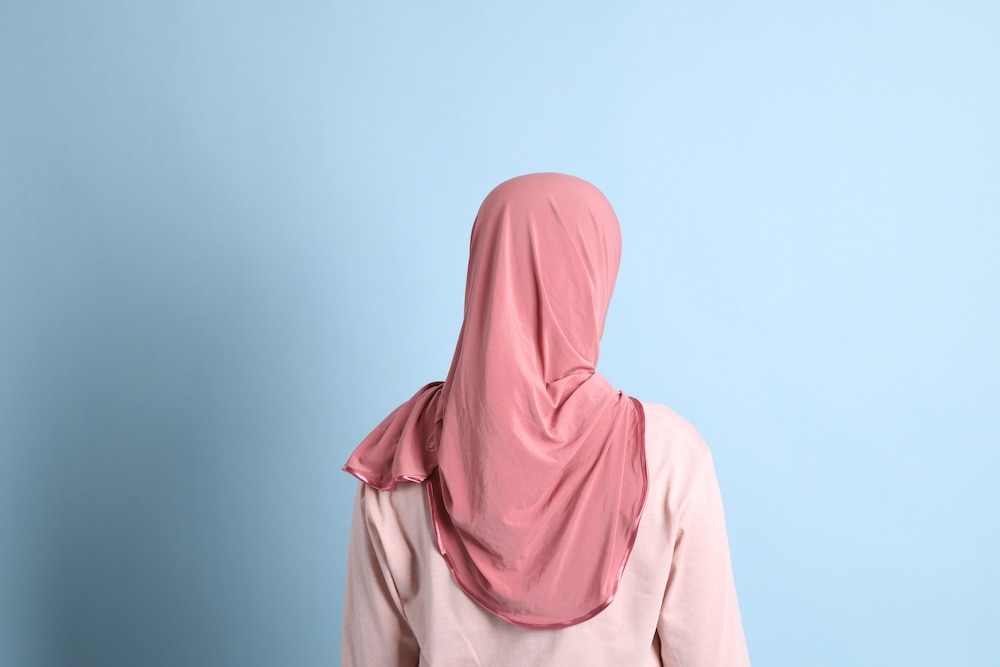
Could anyone have foretold the symbolic power of the hijab? A seemingly insignificant scrap of fabric which ironically strikes terror into the hearts of specific Western governments who attempt to banish it from their public spaces, while simultaneously weaponized by certain Islamic governments to further their own personal agenda. In the chasm which separates the two, lies the majority of Muslim women who don the hijab for their own personal and spiritual reasons. They exist in the dichotomy of choosing the hijab for themselves, but uncomfortable with the reality that there are Islamic states which do not give their female citizens that choice and Western nations which legislate away the same choice. It is a space which leaves little room to appreciate the hijab as a safeguard and protection sent down by the Creator; adopted with sincerity by His creation and ultimately, the beauty of that connection.
Many Muslim women who choose to wear the hijab do not feel represented in mainstream media. News headlines run the gamut: One extreme is the recent decision by Austria’s conservative ruling party to ban the head covering in public and private schools for girls under the age of 14 in order to ‘protect their freedom’. Another extreme is Iran’s attempt to enforce a ‘hijab and chastity’ bill, which would significantly increase penalties for violating the country’s mandatory hijab requirements – and such laws notoriously become precursors to iconic images of Muslim women on the frontpages throwing off their burqas.
This frenzied binarism has hijacked the hijab debacle away from the voice of the Muslim woman who is the real impersonator of the hijab and has turned it into a political ploy masquerading as ‘secularism’ in the West and ‘religion’ in the East. As a consequence, the hijab has become a symbolic pawn in the hands of these binaries wherein its noble purpose is lost amid the noise and clamor. To be able to cut through this polarization, it becomes imperative to understand that both sides of the rhetoric is extremist and subjugates the woman in its own way.
Paradoxically, when the roots of women covering their heads are traced, we find that headscarves were a thing long before the birth of Islam. Nearly two millennia before Islam, Jewish women were covering their heads and dressing modestly; Talmudic law mandating married women in particular to cover not just their heads in public, but also their arms and legs fully and required that high necklines be worn. And at least 500 years before the Quranic passages on modesty were revealed, the New Testament explicitly commanded women to wear veils in churches (1 Corinthians 11:5-6). During the early church period, veiling was widely observed across the Roman, Greek and Syriac Christian worlds as a sign of nobility and respect.
Today, Sisters from the Catholic and Eastern Orthodox traditions continue to wear the head covering and are often fully enrobed. Buddhist nuns also wear specialised robes covering their full bodies, women of Amish faith wear a bonnet as a sign of respect, the mantilla is a scarf commonly worn by Spanish and Latin women when they attend church, orthodox Jewish women still wear wigs or scarves to cover their hair after marriage, Zoroastrian women cover their heads for prayer and religious rituals and some Hindu women still wear the ‘ghoongat’ (veil) to denote modesty.
Thus, across the various faith traditions, women embrace the head covering as a way to respect their Creator, to embrace modesty, and to protect themselves from objectification and yet only the Muslim hijab is singled out to portray oppression, subjugation and the loss of a woman’s agency.
If governments on either side are going to attempt to politicise an Islamic instruction, they should remember that the Holy Quran first and foremost states, ‘There should be no compulsion in religion” (2:257). Thus, the Islamic commandments are there for those who choose to practice them. Religion cannot be legislated by government whims. The Holy Prophet Muhammad (sa) himself set the precedent when both Muslims and Jews lived in Madinah under his rule with the covenant that each people would live according to their own values and traditions.
Thus, the decision to wear the hijab is a very precious one. When Muslim women make that choice, they are accepting the safeguard God has bestowed with utmost sincerity. They walk out on the street, knowing they will be recognized as such. The beauty lies in their complete surrender to God’s wisdom, in their choosing to do so. Muslim women who choose to wear the hijab see it as a spiritual decision, a way to honour and connect to their Creator.
Yes, the hijab holds symbolic power, but not for those who wish to ban it nor for those who wish to legislate it. It holds power because the woman makes a conscious decision to wrap that scarf around her hair and as she smooths it with careful hands, she steps out the door surrendering in whole sincerity to a Higher Being. She is no one’s pawn.
About the Authors:
Nila Ahmad is the Editor of the Women’s Section of The Review of Religions. She lives in the southern United States with her family. Having graduated with an art degree, she has participated in the illustration of children’s books, as well as serving on the team for US magazine Al-Hilal. Her particular interest is in dispelling misconceptions around women’s status in Islam.
Ayesha Mahmood Malik is the Editor of the Law and Human Rights Section of the Review of Religions magazine. She is interested in Law and Religion, in particular Islam and Human Rights, the role of media in crisis reporting, International Human Rights and the import of religion on radicalisation. She has spoken frequently on these issues in the national media and various universities in the UK, including the University of Oxford and the London School of Economics. She is a graduate of Harvard Law School.
Add Comment