
Even in safety, the echoes of distant wars invade our minds. How global conflict is reshaping the mental landscape of people who never hear a bomb fall.

© Shutterstock
By Musa Sattar, London, UK
It is eight o’clock in the morning of June this year in a quiet English suburb. Luna [1], a mother of two, stands in her kitchen in Surrey, pouring cereal into small bowls. For a moment, the clinking of spoons pauses. The television hums with grim headlines from the Middle East. On the screen, images of missile trails over Haifa flicker across the room’s soft light. Luna lowers her gaze to her phone, refreshing a messaging app where her family in Haifa, the neighbourhood on top of Mount Carmel where she grew up, shares updates.
‘I lived on top of the Carmel Mountain, in a peaceful neighbourhood in Haifa,’ she says softly. ‘The beauty of it was the open view of the city and the Mediterranean Sea. My house was built above my grandparent’s house, right across the mosque.’
That beauty now feels like a memory from another world. When the war between Israel and Gaza began, followed by the conflict with Iran, her daily rhythm fractured. ‘When the missiles started to rain down in Haifa, my first reaction was utter dread. I found myself in tears often.’
Although she lives thousands of miles from the explosions, Luna is caught in an invisible crossfire, the emotional battlefield of global war coverage. ‘Every day I would ring to find out the situation in Haifa,’ she recalls. ‘Sirens were going off every day, and my family had to rush back and forth between their home and shelters. Not everyone has bunkers there, so I knew there was imminent risk of the worst.’
Her voice steadies as she adds, ‘I held firm in my faith that Allah would protect them. This was the hope that kept me going.’
She and her husband now raise their children in safety, but her mind remains tethered to the hill where sirens still wail.
Luna is one of millions who live far from battlefields yet find themselves pulled into war’s orbit. She has never seen the craters that scar her hometown, but she feels their aftershocks daily.
Wars in Palestine, Ukraine, Sudan, Myanmar, Libya, and across the Indian subcontinent are not just shaping geopolitics, they’re shaping the global psyche. These conflicts, once confined to distant frontlines, now saturate social media feeds, dominate news cycles, and seep into everyday conversations. In the 21st century, war has become ambient: not only expanding its geographic footprint, but embedding itself into the emotional fabric of societies worldwide. The battlefield is no longer just physical; it’s psychological, digital, and deeply personal.
Psychologists call this phenomenon vicarious trauma, the transmission of stress and anxiety from witnessing suffering rather than experiencing it first-hand. Dr Pam Ramsden from the University of Bradford found that shows that even those who simply follow war through news and social media may experience symptoms akin to post-traumatic stress [2].
In Gaza, a peer-reviewed clinical study published in July 2025,[3] found that 83.5% of adults met the criteria for probable PTSD, with 65% reporting moderate to severe anxiety. While these figures measure those directly exposed to war, the ripples extend outward. Professor Metin Başoğlu, an authority on trauma studies and behavioural treatment, warns that ‘fear of drones and unpredictable violence generalises even to less frequently targeted regions. Humans acquire fear vicariously through media or by hearing about others’ trauma.’[4]
In the age of smartphone technology, the geography of fear has shifted [5]. The battlefield is global, but so too is the audience and empathy, when unmoderated, can become its own kind of wound.
For Luna, fear arrived not in a single wave but in a steady tide. ‘Following the news so regularly, seeing the gruesome images, reading heart-wrenching stories of those suffering everyday then seeing everyone around me acting all normal felt almost dystopian,’ she explains.
Her anxiety manifested physically: loss of appetite, sleepless nights, tears she hid from her children. ‘I lose the passion and energy in my life in day-to-day tasks,’ she says. ‘I find myself crying and unable to function. I had to take breaks. I had to save myself.’ She began hiding her tears from her children. ‘I didn’t want them to see their mother broken.’
Luna words illustrate what researchers describe as secondary traumatic stress [6], a condition where indirect [7] exposure to trauma even for altruistic reasons, triggers similar responses to those of direct victims. Studies show that individuals who consume war-related content for more than two hours a day report elevated stress hormones and impaired sleep patterns.
When I spoke to Dr Yael Danieli, the pioneering clinical psychologist in New York whose work on the multigenerational effects of trauma spans decades, she told me that unprocessed pain rarely stops with one generation. ‘Trauma doesn’t fade with time. If it remains unaddressed, it persists,’ she said during our conversation. ‘The way survivors adapt, how they cope and raise children becomes the vehicle of transmission.’ [8]
Luna recognises this dynamic. ‘Initially, I didn’t show my children anything,’ she says. ‘Eventually, my husband and I told them what was happening so they would at least pray. I didn’t want them to grow up with hate in their hearts.’
Her coping mechanisms are modest but deliberate. She prays, bakes, writes private notes on her phone, and talks to other mothers. ‘Prayer is the biggest comfort,’ she says. ‘I cry before my Allah, knowing this is the main thing I can do to make a change.’
Dr Danieli explained, ‘Children absorb the fears and silences of their parents. If the trauma remains unacknowledged, it shapes identity.’
In a rented apartment, in another continent, Muhammad, a university student in Canada, carries his own invisible scars. His body is safe, but his heart is not. ‘I live in a small and beautiful village in northern Palestine,’ he says wistfully. ‘I miss the view of the sunset from the top of the hill, the smell of freshly baked bread, and the laughter of children playing in the alleys.’
When Iranian missiles struck near his home village, he received a video from a relative. ‘Seeing that scene so close to my home and my family caused me a great deal of stress and anxiety,’ he recalls. ‘I’ve been avoiding news that brings sadness and anxiety for a while now, because a person can’t endure such intense pressure.’
He describes his memories as embodied. ‘Sometimes I remember laughter or even silence that told its own story. These memories aren’t just images; they’re full feelings. Sometimes a quiet tear comes out without me noticing, as if it’s a message from time itself.’
Psychologists recognise this somatic echo of trauma, the body remembering what the mind has tried to suppress. Muhammad’s experience mirrors the findings of Professor Başoğlu, ‘Helplessness induced by unpredictable and uncontrollable stressors plays an important role in the development of traumatic stress reactions.’ [9] Even hearing or seeing these events from afar can elicit ‘fear generalisation,’ [10] a form of learned anxiety that extends beyond the original threat.
For students like Muhammad, this means divided focus, emotional fatigue, and guilt. ‘It’s strange to attend lectures, to laugh with friends, when I know my family are hiding in shelters,’ he admits. ‘It feels wrong to be normal.’
Modern neuroscience helps explain why people like Luna and Muhammad suffer so deeply from events they cannot touch. Functional MRI studies show that viewing images of others in pain activates the same neural pathways that register our own suffering, particularly in the anterior insula and anterior cingulate cortex (the same neural pathways involved in processing one’s own pain) [11].
Psychologists describe this state as vicarious trauma [12], [13], [14], stress reactions arising from witnessing suffering rather than experiencing it firsthand. The term entered humanitarian and clinical vocabulary in the 1990s [15], but digital media has turned it into a mass phenomenon. Research shows that people who follow war news intensively can develop symptoms mirroring those of direct survivors: intrusive thoughts, sleep disruption, irritability, even survivor’s guilt.
This empathy circuitry, while essential to human morality, can also be exploited by the constant stream of visual media. ‘Drone warfare,’ Başoğlu writes, ‘involves strong elements of unpredictability and uncontrollability, conducive to an “inescapable shock” environment.’ [16] Media coverage of such warfare reproduces this environment for viewers, especially when accompanied by visceral imagery and fragmented context.
Dr Danieli adds that ‘survivors internalise silence’ [17] and so do observers. When distressing content becomes routine, societies fall into what she calls the ‘conspiracy of silence’ [18]: people stop speaking of trauma because they fear burdening others or being disbelieved. In our interview, Dr Danieli also warned that what cannot be talked about cannot be put to rest.
‘I can’t do anything about it, but I also can’t look away,’ said Nathan, a 52-year-old British man with no relatives in any conflict zone. An avowed atheist, he never imagined that distant wars could disturb his mental balance. Yet every evening, he finds himself scrolling through the same torrent of videos and news flashes that engulf Luna and Muhammad. ‘Sometimes I become really helpless,’ he admits.
For months he wrestled with guilt for simply living comfortably. Nathan eventually channelled his frustration into action, volunteering at a local food bank run by the Ahmadiyya Muslim Community. ‘I realised that helping here, even locally, was a way of restoring some sense of control,’ he says.
The psychological data are sobering. Meta-analyses published in Frontiers in Psychiatry[19] show that 30.7% of populations exposed to war directly or indirectly exhibit anxiety disorders, while 23.5% show signs of PTSD. Even those who simply consume high volumes of war news display elevated stress markers.
While Luna and Muhammad wrestle with helplessness from afar, others like Dr Aziz Hafiz, chairman of Humanity First and a clinician in the NHS, confront the same crisis face-to-face. Having served repeatedly in Gaza and other conflict zones, he speaks with measured restraint. ‘The long-term impact of war is huge,’ he says. ‘People there live under siege, under blockade, under constant bombardment. Each night they struggle to sleep from the buzzing of drones and the fear that their tent will be next.’
He describes scenes that defy comprehension, ‘Having to gather twigs each morning to light a small fire to heat some water in the winter is a daily chore, and you hope that you can provide something to keep your children clean. The pain of a father having to cut the long hair of his young daughter to avoid her getting insects in them due to not having any way to wash her hair. It was then I realised the inhumanity of conflict.’
Even as a trained physician, he admits, ‘You wouldn’t be human if seeing death, destruction and starvation didn’t have an impact. The key is how you process it, to remain professional and focused on the responsibility to serve. Prayer and turning to God Almighty are the most important tools to assist.’
Dr Hafiz notes that compassion fatigue has spread beyond aid workers. ‘There is deep trauma, chaos, and unpredictability in these environments,’ he explains. ‘Diaspora communities share in that trauma through constant connection. We see the same signs of sleeplessness, guilt, helplessness, even among those in the West.”
His reflection echoes Başoğlu’s research, recovery requires the restoration of control. ‘Interventions that enhance mastery and agency yield greater improvement,’ Başoğlu writes. ‘Even under ongoing threat.’ [20]
Across these stories, one pattern emerges: those who sustain their mental health cultivate a sense of agency, whether spiritual or practical. Luna prays. Muhammad disconnects from distressing news. Dr Hafiz anchors himself in service.
‘Indeed, there is deep trauma, chaos and unpredictability in these environments’, said Dr Hafiz, ‘but the living example of His Holiness, Hazrat Mirza Masroor Ahmad (aba), is a constant guide and compass on how to lead having full conviction in the power of prayer and trust in God Almighty.’
This aligns with what Başoğlu refers to as ‘Control-Focused Behavioural Treatment’[21] in his book A Mental Healthcare Model for Mass Trauma Survivors, which emphasises regaining a sense of mastery even when circumstances are uncontrollable. Psychologically, control is the antidote to helplessness.
Spiritually, it mirrors what Hazrat Mirza Masroor Ahmad (aba) [22], who is a leading Islamic figure promoting world peace and harmony, describes as the ultimate moral duty: to act with justice and turn to the Creator.
‘Humanity must urgently turn its attention towards God Almighty so that it may be saved from further misery and potential destruction,’ [23] he has said. ‘Peace does not lie in power or wealth, rather peace lies in the cradle of God Almighty.’ [24]
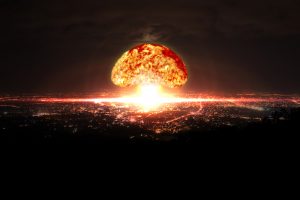
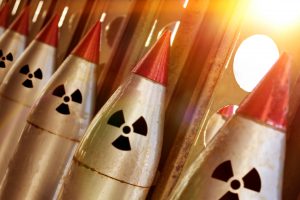
In his public addresses, Hazrat Mirza Masroor Ahmad (aba) consistently warns that without justice and humility, the world edges closer to catastrophe. ‘If there is a nuclear war, we will not only be destroying the world today but leaving behind a trail of misery for future generations,’ [25] he stated. His call is both moral and psychological, a collective therapy for nations addicted to aggression.
The modern war does not end where the missiles fall. Its impact travels through fibre-optic cables, into homes and minds across continents. This diffusion of trauma reveals a cruel irony: the digital age[26] has brought distant suffering into unprecedented proximity [27], yet this very intimacy can erode our capacity for meaningful action. Research on compassion fatigue shows that constant exposure to others’ pain, even when it evokes genuine empathy, leads to psychological saturation and, ultimately, withdrawal.
The pattern is visible in social media activism: outpourings of empathy that quickly fade into numbness. Studies in digital psychology show that repeated exposure to distressing imagery triggers desensitisation, a protective response that suppresses emotional engagement. Over time, this blunts compassion and fuels cynicism [28].
Dr Danieli argues that societies must counteract this through acknowledgment and shared mourning. ‘The trauma must become a shared rather than a stigmatising history,’ she says. ‘To forsake this opportunity is to perpetuate silence and deprive yourself of historic memory.’
In the United Kingdom, diaspora communities [29] have begun holding interfaith vigils and mental health workshops to process the collective weight of global violence. These gatherings, modest as they are, mark an effort to speak against silence to transform empathy from paralysis into solidarity.
Nathan has no religious belief, but he quotes approvingly from Hazrat Mirza Masroor Ahmad (aba), whose warning against global conflict he discovered through that community, ‘We still have the time to stop such a war in its tracks, but the solution remains to act with justice and to leave aside all vested interests.’ For Nathan, that call to justice resonated as human rather than theological truth. ‘Maybe belief isn’t the point,’ he reflects. ‘What matters is acting before despair takes over.’
Nathan’s reaction illustrates how secondary trauma does not discriminate by faith or geography. The modern information ecosystem ensures that anyone with empathy and an internet connection can feel the weight of distant suffering.
Research published in the International Journal of Environmental Research and Public Health found that media exposure to armed conflict was directly associated with psychological distress and post-traumatic symptoms in adolescents aged 13-18 [30].
Four months after my first interviews, the global map of violence has shifted again. Gaza lies under a fragile ceasefire, yet conflicts elsewhere continue to smoulder. The world’s attention drifts, but psychological wounds remain stubbornly current.
One evening, Luna’s children ask her why she looks sad. She pauses, then kneels beside them. ‘Because people are suffering,’ she says. ‘And I wish I could help.’ She does not show them the news clips. Instead, she leads them in a short prayer for peace.
For Muhammad, healing begins in small acts of remembrance, writing letters to his family, tending plants on his apartment balcony, replaying recordings of the call to prayer from his village. For Dr Aziz Hafiz, healing is found in the work itself, in the refusal to look away.
These are the quiet forms of resistance against despair. They remind us that to care is not weakness, but moral strength.
A little later in our discussion, Dr Danieli reflected on how that legacy [31] takes form. ‘There are roughly three ways people adapt [32] after massive trauma,’ she explained. ‘Some adopt what I call a victim style, others a fighter style, and some fail to adapt at all, revealing the numb style [33]. These are not just patterns of symptoms; they become ways of living. Even children born long after the violence end up absorbing these emotional blueprints from their parents. The war might stop, but the way of surviving it often continues, quietly shaping the next generation.’
Dr Danieli warned that global exposure through digital media multiplies this transmission. ‘What you see online is not a safe distance,’ she added. ‘The nervous system doesn’t distinguish between seeing and experiencing pain when the exposure is intense and repeated.’
Yet the question lingers for all who live in comfort while the world burns: How much suffering can we witness before we become numb, and what will it take to turn our empathy into action? The world’s ceasefires may hold or fail, but the emotional frontlines are everywhere, inside kitchens, dorm rooms, and quiet British streets.
Because war today is not only fought with weapons; it is transmitted through images, words, and silence. The ceasefires may quiet the skies, but the psychological echoes will outlast the explosions. Healing them demands something the headlines cannot supply: a decision by each observer to transform empathy into action.
As His Holiness, Hazrat Mirza Masroor Ahmad (aba), has cautioned, ‘for the world to return to its normal conditions, we must bow before God and fulfil His rights and the rights of His creation.’ [34] Without that spiritual and ethical reckoning, peace will remain a temporary pause between the echoes of violence.
About the Author: Musa Sattar has an MSc in Pharmaceutical Analysis from Kingston University and is serving as the Assistant Manager of The Review of Religions and the Deputy Editor of the Science & Religion section.
ENDNOTES
[1] Luna, Muhammad and Nathan are pseudonyms used to protect their identities and families.
[2] https://www.sciencedaily.com/releases/2015/05/150506164240.htm
[3] Zughbur MR, Hamam Y, Kagee A, et al. ‘Prevalence and correlates of anxiety, depression, and symptoms of trauma among Palestinian adults in Gaza after a year of war: a cross-sectional study.’ Conflict and Health. 2025;19(1):43. doi:10.1186/s13031-025-00681-1
[6] Levy E, Herzog D, Ryder CH, Grunstein R, Gidron Y. ‘Indirect Exposure to Atrocities and Post-Traumatic Stress Disorder Symptoms among Aid Workers: Hemispheric Lateralization Matters.’ Journal of Clinical Medicine. 2024;13(8):2373. doi:10.3390/jcm13082373
[7] Zasiekina L, Martyniuk A. ‘War-related continuous traumatic stress as a potential mediator of associations between moral distress and professional quality of life in nurses: a cross-sectional study in Ukraine.’ BMC Nursing. 2025;24(1):16. doi:10.1186/s12912-024-02668-4
[8] Yael Danieli, ‘Multigenerational Legacies of Trauma,’ Psychosomatic Medicine and General Practice. 2023.[cited 2025 Oct. 16];8(1):e0801409. https://e-medjournal.com/index.php/psp/article/view/409
[10] Hijazi A, Ferguson CJ, Hall H, Hoove M, Ferraro FR, Wilcox S, ‘Psychological dimensions of drone warfare.’ Current Psychology. 2017; 38(5): 1285-1296. doi:10.1007/s12144-017-9684-7
[11] Gu X, Gao Z, Wang X, et al. ‘Anterior insular cortex is necessary for empathetic pain perception.’ Brain. 2012;135(Pt 9):2726-2735. doi:10.1093/brain/aws199
[12] Peacock A. ‘Compassion satisfaction, compassion fatigue, and vicarious trauma.’ Nursing Management. 2023;54(1):14-22. doi:10.1097/01.NUMA.0000905000.95966.96
[13] Xu J, Chen D, Jongo Fouelefack BL, Zhou Y. ‘Vicarious post-traumatic growth in Chinese oncology nurses: A cross-sectional study.’ PLoS One. 2025;20(6):e0326185. doi:10.1371/journal.pone.0326185
[14] Kanya M, Davis P, Robertson GC. ‘Constantly Connected: What Healthcare Providers Need to Know About Vicarious Trauma in an Evolving Digitally Connected Global Community.’ Missouri Medicine. 2025;122(4):304-309.
[15] https://svri.org/sites/default/files/attachments/2016-01-13/49.full_.pdf
[16] Basoglu, M. ‘Drone strikes or mass torture?– A learning theory analysis.’ (2012). http://metinbasoglu.wordpress.com/2012/ 11/25/drone-warfare-or-mass-torture-a-learning-theory-analysis/.
[17] Dalgaard NT, Montgomery E. ‘Disclosure and silencing: A systematic review of the literature on patterns of trauma communication in refugee families.’ Transcultural Psychiatry. 2015;52(5):579-593. doi:10.1177/1363461514568442
[18] https://icmglt.org/wp-content/uploads/2020/04/danieli-1984.pdf
[19] Lim ICZY, Tam WWS, Chudzicka-Czupała A, et al. ‘Prevalence of depression, anxiety and post-traumatic stress in war- and conflict-afflicted areas: A meta-analysis.’ Frontiers in Psychiatry. 2022;13:978703. doi:10.3389/fpsyt.2022.978703
[20] Basoglu, M., Livanou, M., & Crnobaric, C. ‘Torture vs. other cruel and, inhuman, and degrading treatment; Is the distinction real or apparent?’ Archives of General Psychiatry, 2007; 64,277–285. https://doi.org/10.1001/archpsyc.64.3.277.
[21] Basoglu M, Salcioglu E. ‘Control-focused behavioral treatment.’ In: A Mental Healthcare Model for Mass Trauma Survivors: Control-Focused Behavioral Treatment of Earthquake, War and Torture Trauma. Cambridge University Press; 2011:79-109.
[22] https://www.reviewofreligions.org/hazrat-mirza-masroor-ahmad-fifth-khalifa-of-the-promised-messiah/
[26] Robertson CE, Shariff A, Van Bavel JJ. ‘Morality in the anthropocene: The perversion of compassion and punishment in the online world.’ PNAS Nexus. 2024;3(6):193. doi:10.1093/pnasnexus/pgae193
[27] Ah Ram Lee, Linda Hon, Jungyun Won, Psychological proximity as a predictor of participation in a social media issue campaign, Computers in Human Behavior. 2018; (85) 245-254, ISSN 0747-5632, https://doi.org/10.1016/j.chb.2018.04.006.
[28] Krahé B, Möller I, Huesmann LR, Kirwil L, Felber J, Berger A. ‘Desensitization to media violence: links with habitual media violence exposure, aggressive cognitions, and aggressive behavior.’ Journal of Personality and Social Psychology. 2011;100(4):630-646. doi:10.1037/a0021711
[30] Pe’er A, Slone M. ‘Media Exposure to Armed Conflict: Dispositional Optimism and Self-Mastery Moderate Distress and Post-Traumatic Symptoms among Adolescents.’ International Journal of Environmental Research and Public Health. 2022;19(18):11216. Published 2022 Sep 7. doi:10.3390/ijerph191811216
[31] https://www.apa.org/monitor/2019/02/legacy-trauma
[32] Danieli Y, Norris FH, Lindert J, Paisner V, Kronenberg S, Engdahl B, Richter J. ‘The Danieli Inventory of Multigenerational Legacies of Trauma, Part II: Reparative Adaptational Impacts.’ American Journal of Orthopsychiatry. 2015 May;85(3):229-37. doi: 10.1037/ort0000055. PMID: 25985110.
[33] Yael Danieli, Fran H. Norris, Jutta Lindert, Vera Paisner, Brian Engdahl, Julia Richter, ‘The Danieli Inventory of Multigenerational Legacies of Trauma, Part I: Survivors’ posttrauma adaptational styles in their children’s eyes.’ Journal of Psychiatric Research, 2015; 68(167-175). ISSN 0022-3956, https://doi.org/10.1016/j.jpsychires.2015.06.011.
[34] https://www.alhakam.org/germany-atfal-pose-variety-of-questions-to-hazrat-khalifatul-masih-in-virtual-meeting/

Add Comment