
© Shutterstock
In a world teeming with diverse cultures, traditions, and spiritual paths, one central theme persists: the essence of remembering the Divine. This is clearly exhibited across major religious beliefs, and all these major belief systems affirm the supremacy of the Divine as the Creator and the Sustainer.
In the diverse practices of African Traditional Religion, the remembrance of the Divine is a core tenet that is communal and symbolic, often employing elements such as proverbs, symbols, oral traditions, festivals, and pouring libations (i.e., symbolic offerings of liquid to a deity). Whilst these may differ from Islamic practices, the fundamental intent of acknowledging God’s supreme authority remains present in both. This shared devotional impulse confirms the remembrance of the Creator as an ancient and unifying human concern.
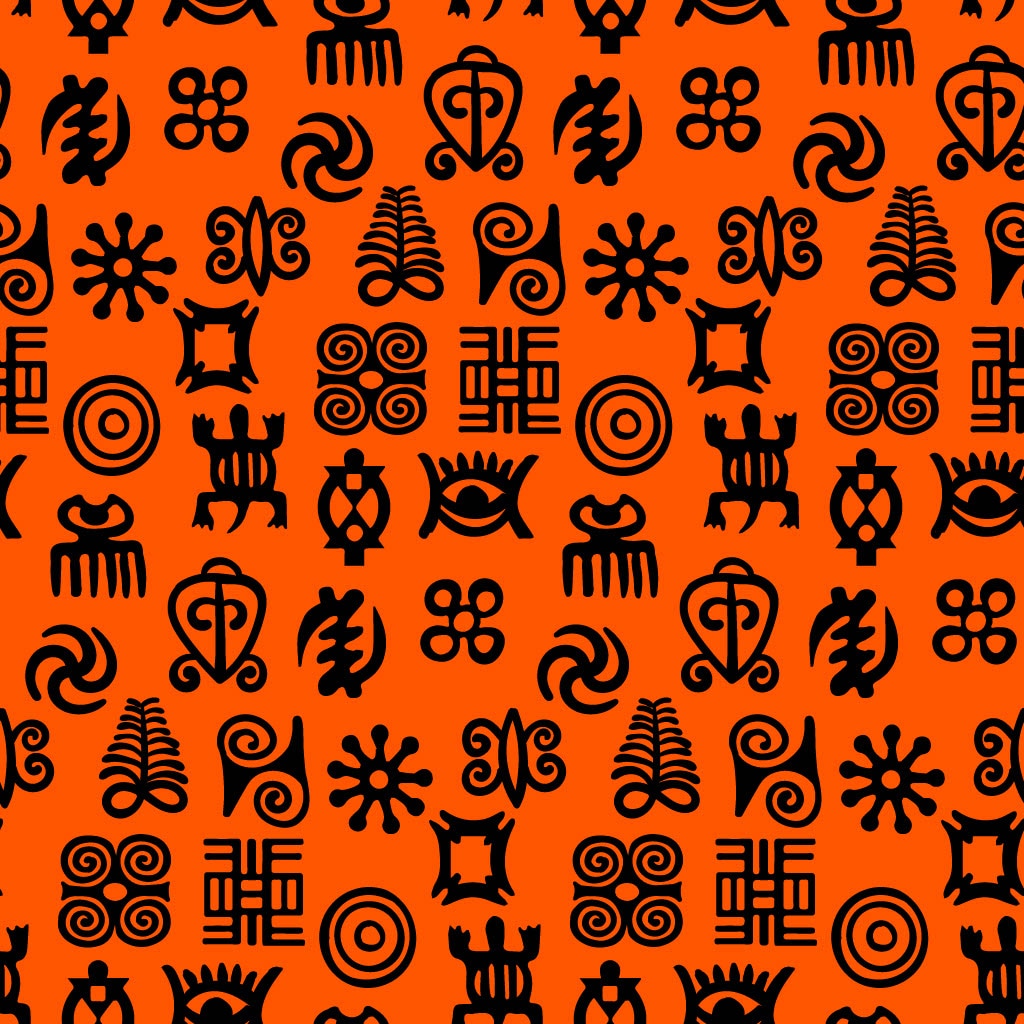
In the heart of West Africa, Ghana cradles symbols called Adinkra, a name that means ‘farewell’, yet speaks not of endings but of the quiet continuity between what departs and what endures. Whilst these symbols were created initially by the Gyaman people in what is now Côte d’Ivoire, they were adopted by the neighbouring Asante kingdom and popularised by the broader Akan people, becoming a celebrated expression deeply rooted in the cultural fabric of modern-day Ghana. Across the African continent, these symbols are etched into art, carved into wood, woven onto cloths, and painted into sacred spaces. These sacred spaces refer not only to shrines and sites of reverence but also to community gathering places and objects designed to keep the divine at the forefront of an individual’s daily life. Contemporarily, these symbols are visible on buildings, currency notes, traditional clothing, decorative pieces for events, and sometimes modelled into jewellery and other ornaments.
These symbols express themes related to the history and beliefs of the Asante (an ethnic group in Ghana) and often possess rich proverbial meaning, since proverbs play an important role in their culture. African Traditional Religion is deeply visual. The usage of these symbols is not limited to mere decorations; they carry centuries of meaning, teaching moral truths, recalling creation stories, and reminding communities of the Creator’s presence. For example, one of its most revered symbols, Gye Nyame, meaning ‘Except for God’, is an overt proclamation of the supremacy and omnipotence of the Divine.
Before exploring these visual narratives, it is essential for me to establish the spiritual lens through which I write this piece. As a Ghanaian, I have grown up seeing Adinkra symbols all around me. But at the same time, as a Muslim, I have been taught the concept of dhikr, i.e., the remembrance of Allah. Dhikr is not merely a ritual, but an inner awareness, the understanding of the relationship between Allah, the Creator, and human beings in their search for Him. As a profound means of nourishing the soul and establishing an intimate connection with the Creator, the Holy Qur’an emphasises its importance: ‘And the remembrance of Allah indeed is the greatest virtue.’[1] In order to carry out this remembrance, Allah Almighty has taught us over 100 of His names or attributes, each of which uncovers a new aspect of His Being.
With this in mind, I was fascinated to discover whether or not there was any correlation between the attributes of Allah and the Adinkra symbols of the African Traditional Religion. If so, it would serve to demonstrate that the profound truths embedded in the Adinkra symbols are, in essence, from the same divine source that calls people of all regions to the One True God.
I shall now present some of the Adinkra symbols, their meanings, and how they remind me of Islamic teachings, whether from the Holy Qur’an, Hadith, or the writings of Hazrat Mirza Ghulam Ahmad (as), the Promised Messiah (as). In doing so, my aim is for us to come to appreciate how dhikr (remembrance of God) can transcend language and geography, and be the universal heartbeat for those seeking the Divine.
Adinkra Symbols and Their Alignment with Islamic Remembrance of Allah

Gye Nyame (Except for God)
This symbol is arguably the most popular in Ghana, signifying the supremacy and omnipotence of God. This directly reflects Allah’s attribute of being Omnipotent and All-Powerful. The Qur’an emphasises, in numerous instances, that Allah has power over all things and the ability to do whatever He wills. The Promised Messiah (as) beautifully explains:
‘He has control over everything, and He holds all the strings in His Hand. His wisdom knows no limit, and it penetrates to the root of every particle. Nothing possesses properties that are in excess of His powers. All the qualities that things may possess are within the scope of His power.’ [2]

Nyame Dua (Tree of God)
This symbol represents God’s presence and protection. It reminds me of the Qur’anic concept of Allah being al-Hafeez (the Protector). The symbol functions as a spiritual anchor, asserting that ultimate safety is not found in human strength but is rooted entirely in the Divine. This truth reinforces the purpose of dhikr to seek perpetual spiritual security, just as the Prophet Muhammad (sa) regularly sought Allah’s protection through supplication, emphasising remembrance as the ultimate shield.

Biribi Wo Soro (There is Something in the Heavens)
This is a direct expression of hope and belief in divine intervention. When seeing this symbol, one is encouraged to lift their gaze, trusting that difficulties are not absolute. To me, this sentiment beautifully aligns with the reassurance found in the Holy Qur’an: ‘Verily, with hardship comes ease.’ [3] It shows belief in a Higher Being Who brings comfort in trials. He answers our prayers when we turn to Him, as is evident in, ‘Pray unto Me; I will answer your prayer.’ [4]

Abe Dua (Palm Tree)
The Abe Dua symbolises self-sufficiency and usefulness. While the palm itself is abundant and resourceful, the symbol reminds me – as a creation of God – of my ultimate spiritual reliance on Allah, Who is al-Ghaniyy (Self-Sufficient). This symbol teaches usefulness, but the spiritual reality remains that ‘Man will have nothing but what he strives for.’ [5] This parallel encourages a life of service and self-sufficiency, but always tempered by the humble recognition that all true independence comes from the Creator.

Akoma (Heart)
The heart is universally known as the symbol of love, but as an Adinkra symbol, it represents patience and tolerance. This immediately calls to mind the Islamic virtue of sabr (patience and steadfastness), which constitutes the spiritual foundations of a believer. The Qur’an promises profound reassurance ‘Surely, Allah is with those who are steadfast.’[6] The Promised Messiah (as) has elaborated that it is through patience that one finds success: ‘Those who are in haste get tired quickly and give up, and those who are steadfast persevere and arrive at their objective.’[7]

Pempamsie (Sew in Readiness)
This traditionally signifies the need for diligence and unity. Similarly, in Islam, Allah addresses believers in the Qur’an as He says, ‘O ye who believe! Take your precautions; then either go forth in separate parties or go forth all together.’[8] In my opinion, this idea extends powerfully to the realm of spiritual preparedness through continuous dhikr. The constant and deliberate remembrance of Allah is the diligent work that equips the soul for trials and maintains the unity of one’s purpose, aligning with the Qur’anic injunction: ‘And remember Allah much that you may succeed.’[9] True readiness, therefore, is the continuous ‘sewing’ of divine consciousness into the entire fabric of one’s existence.

Fawohodie (Independence)
This signifies freedom and independence. Seeing this symbol, I am reminded of the ultimate spiritual freedom achieved when one holds firmly to Allah, illustrating the guidance: ‘And whoever holds firmly to Allah has certainly been guided to a straight path.’[10] The prayer of the Holy Prophet (sa) also comes to mind that freedom also comes in the form of shedding one’s desires: ‘O Allah, I ask Thee for guidance, piety, self-control, and freedom from want.’[11]

Duafe (Wooden Comb)
This represents feminine virtues and cleanliness, and is frequently carved into the handles of combs, providing a constant, subtle reminder that ‘Cleanliness is half of faith,’[12] a guiding principle taught by the Holy Prophet (sa). The Promised Messiah(as) has expounded upon the connection between inner and outer cleanliness by stating, ‘Anyone who desires to develop an inner state of righteousness and purity must also be physically clean as well.’[13]

Eban (Fence)
This symbolises security and safety. It is often incorporated into architectural designs on homes for that very protection, and this reminds me that Allah is the only One Who can keep us protected (al-Mu’min), echoing the divine statement: ‘He is Allah…the Giver of security.’[14]

Woforo Dua Pa A (To Climb a Good Tree)
This symbol is derived from the Akan proverb, ‘It is when you climb a good tree that we give you a push.’ It symbolises support and encouragement and urges mutual aid. This reflects the Islamic call to, ‘Help one another in righteousness and piety.’ I believe that when one embarks on a good and just course, it is incumbent on us as Muslims to help them, because supporting others in righteousness is rewarded by Allah the Almighty.
Conclusion
These are but a few of the many Adinkra symbols I come across in Ghana. However, it is evident that they can be a powerful reminder of the Being Who created us all. They teach various aspects of His nature and how He can help us in our day-to-day lives. They indeed help me as a Muslim to continue to perform dhikr, i.e., the remembrance of God. It is a means of nourishing the soul and establishing an intimate connection with the Creator. Almighty Allah Himself indicates in the Holy Qur’an, ‘And the remembrance of Allah indeed is the greatest virtue.’[15]
In fact, so much importance is laid upon remembering Allah that the Holy Prophet (sa) once said, ‘The comparison of the one who remembers Allah and the one who does not remember Allah is like that of the living and the dead.’[16]
When we succeed in keeping God in our minds all the time, only then may we attain true piety. Hazrat Mirza Ghulam Ahmad (as), the Promised Messiah and Reformer, explains, ‘True righteousness is that your heart becomes so immersed in the love of God that your every action is for His sake alone.’[17]
When these symbols are understood through the light of the Qur’an, ahadith, and the words of the Promised Messiah (as), they remind us that the remembrance of God is a universal language that speaks across cultures, beyond time, and straight to the heart, calling us to live each day in the love and presence of the One True God.
About the Author: Ahmed Acheampong-Kankam is a versatile legal professional called to the Ghana Bar in 2025, blending expertise in corporate governance with a strong background in culture and tourism. As the founder of Honeypot Tourism Agency and a marketing strategist at Hakama Company Limited, he drives innovation across the legal, business, and creative sectors.
ENDNOTES
1. The Holy Qur’an, 29:46.
2. Hazrat Mirza Ghulam Ahmad (as), The Blessings of Prayer (Islam International Publications Ltd., 2007), 46, footnote.
3. The Holy Qur’an, 94:6.
4. The Holy Qur’an, 40:61.
5. The Holy Qur’an, 53:40.
6. The Holy Qur’an, 2:154.
7. Hazrat Mirza Ghulam Ahmad (as), The Essence of Islam – Vol. II (Islam International Publications Ltd., 2004), 201.
8. The Holy Qur’an, 4:72.
9. The Holy Qur’an, 62:11.
10. The Holy Qur’an, 3:102.
11. Mishkat al-Masabih, Hadith 2484.
12. Sahih Muslim, Hadith 223.
13. Hazrat Mirza Ghulam Ahmad (as), Malfuzat – Vol. I (Islam International Publications Ltd., 2018), 254.
14. The Holy Qur’an, 59:24.
15. The Holy Qur’an, 29:46.
16. Sahih al-Bukhari, Hadith 6407.
17. Hazrat Mirza Ghulam Ahmad (as), The Essence of Islam – Vol. I (Islam International Publications Ltd., 2004), 201.
Add Comment