
Iran’s qanat system reveals a history that unsettles the West’s favourite narrative. Long before Europe learned to shape its landscapes, Persia engineered subterranean aqueducts that carried life across deserts, built cities where none should have existed, and developed hydraulic systems so sophisticated that medieval Europeans would later adopt them through the channels of Islamic exchange.
By Musa Sattar, London, UK
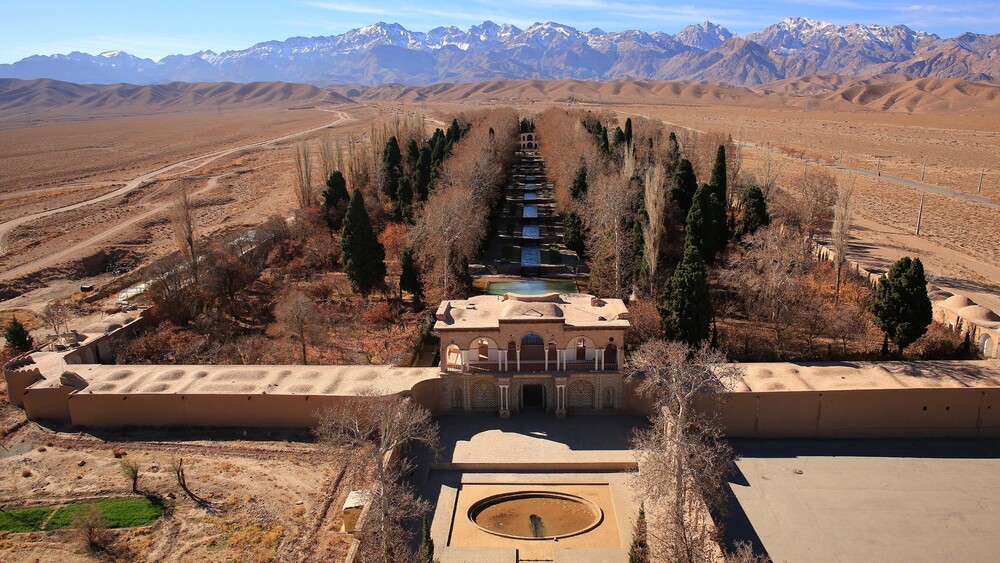
The Persian Qanat: Aerial View, Jupar, Bagh-e Shahzadeh (Mahan) © S.H. Rashedi
How often do we pause, amid headlines about sanctions, nuclear negotiations, and regional tension, to ask a quieter question, what has Iran given the world? Not in terms of geopolitics, but in ideas, in science, in the invisible systems that quietly sustain human life.
It was this question that first pulled me away from the familiar narratives and into a story buried beneath the ground, quite literally, a story of water, ingenuity, and survival that stretches back more than two millennia.
My journey began not in a desert, but during an online search for a completely different topic, when a passing reference in a National Geographic short documentary[1] to an ancient irrigation system called the ‘qanat’ caught my attention.
At first glance, it seemed almost too simple to matter, an underground channel carrying water. Yet the more I read, the more it unsettled my assumptions. This was not merely a clever trick of engineering. It was a civilisation-scale solution to one of the hardest problems humans faces, how to live in a land where water is scarce, unpredictable, and often hidden deep below the surface.
And yet, how many people outside specialist circles have heard of it?
For many Western readers, the narrative of Iran that is presented often omits the long history of intellectual and scientific achievement that shaped not only the region but, indirectly, the modern world.
Historically, the lands of Iran were home to diverse communities, Zoroastrians, Jews, Christians, and later Muslims, living and working side by side.[2] In such environments, survival depended not on division but on shared solutions. Water, in particular, demanded cooperation. It required collective effort to build, maintain, and distribute its flow fairly. In this sense, the qanat was not only an engineering achievement but a social contract.[3],[4]
Dale Lightfoot, Professor Emeritus of Geography, in Qanats: Streams of Wells, captures this dual significance when he writes that ‘Qanats have provided essential water to many people in many places for many centuries,’ serving both sacred and everyday needs and shaping ‘social relations through communal maintenance and water sharing.’[5]
To understand its brilliance, it helps to imagine the challenge. Much of Iran consists of arid and semi-arid landscapes, where rainfall is low and evaporation rates are high.[6] Rivers are often seasonal and surface water may disappear quickly under intense heat. A simple well can reach groundwater at one point, but drawing water from it may require repeated manual effort or mechanical pumping.[7] Qanats solve this problem by carrying groundwater through underground channels to the surface by gravity.[8]
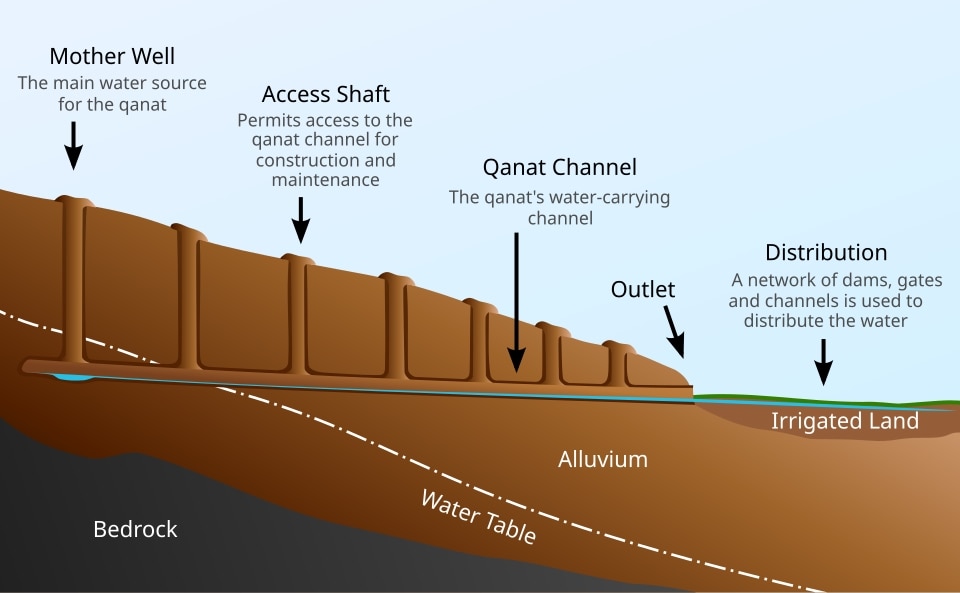
A qanat begins high in the foothills, where underground hidden water collects naturally in aquifers.[9] Engineers identify this hidden water source, often by studying the landscape and soil,[10] sometimes by observing deep-rooted vegetation[11] that hints at moisture below. From there, the specialist diggers called muqannis dig the first and deepest vertical shaft known as ‘Mother Well’ to reach the hidden underground water. Then a narrow, (just large enough for a person to work inside) hand‑excavated tunnel called a Qanat Channel is dug. This gently sloping tunnel carries water from the Mother Well toward the surface. Its length varies with terrain and water depth, some Iranian qanats[12] stretch for several kilometers, with a few extending beyond 100 km. This gently sloping tunnel carries water from the mother-well toward the surface.[13],[14]
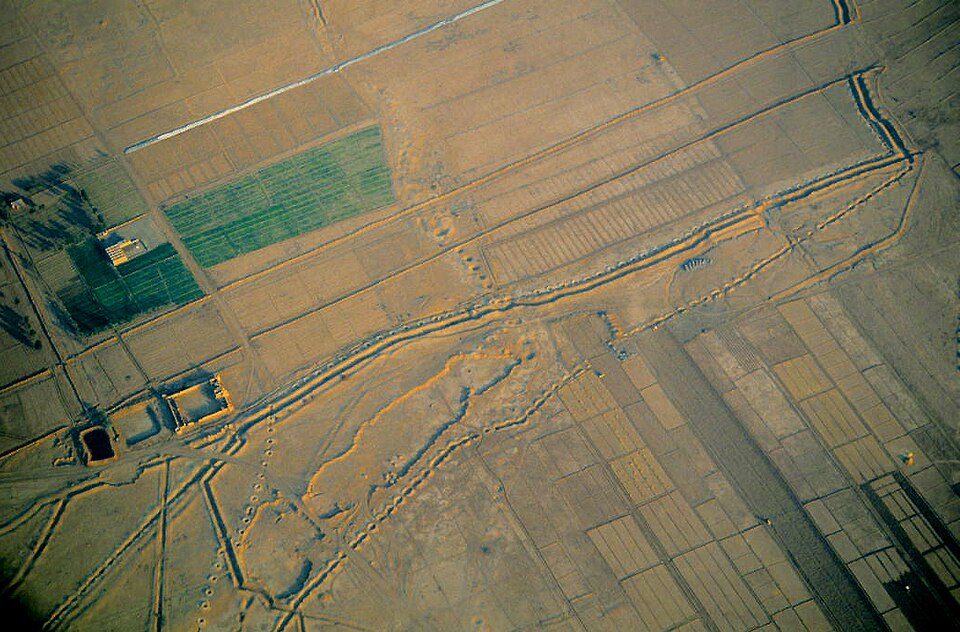
Along this tunnel, vertical shafts are dug at regular intervals. These shafts serve several purposes. For calculating the right direction and proper angle of slope for the horizontal tunnel. They also allow workers to remove soil during construction. They provide ventilation, making it possible to work underground. And later, they offer access points for maintenance. However, these are not themselves used for accessing water. Seen from above, a qanat appears as a line of evenly spaced holes stretching across the desert, like a string of beads laid over the land.[15]
Finally, the Qanat Outlet, known as the Mazhar, is the point where water emerges for use, typically located at the upper edge of a village or farmland. Because it supplies the community, this outlet is carefully maintained, and water use is closely monitored for both quality and quantity. From the outlet moving towards the mother well, the muqannis start to build the gallery, which is a slightly sloped tunnel.[16]
The key to its function lies in precision. The slope must be carefully calculated. Too steep, and the water flows too fast, eroding the tunnel walls. Too shallow, and the water stagnates or fails to reach its destination. Ancient engineers achieved this balance without modern instruments, relying on experience, geometry, and a deep understanding of the terrain.
At its core, the qanat is a simple application of gravity and hydrostatic pressure. Water naturally moves from areas of higher elevation to lower elevation. By tapping into an aquifer at a higher point and providing a controlled pathway downward, the qanat allows water to flow continuously without pumps. Because the tunnel is underground, the water is protected from evaporation, a critical advantage in hot climates.
The scale of these systems is astonishing. Iran is estimated to have had more than 50,000 qanats at its peak, collectively stretching for 200,000 kilometres. Some are still in use today, delivering water to farms and settlements that would otherwise struggle to exist.[17] Their importance is also recognised on a global scale as 11 qanats have earned UNESCO World Heritage status, celebrating their enduring historical and cultural value.[18]
What is perhaps most remarkable is their efficiency. Modern irrigation systems often lose significant amounts of water to evaporation and leakage. Qanats, by contrast, can deliver water with minimal loss, because the flow is shielded underground until it reaches its point of use.
Scientists who have studied these systems often express a sense of admiration. Writing in Scientific American in 1968, H. E. Wulff observed that the qanat system ‘made a garden of what would otherwise have become an uninhabitable desert,’ describing it as an ingenious and farsighted solution devised by Persian communities, one that stands as a lasting tribute to human resourcefulness.[19] This sense of awe is echoed in New Scientist, where German hydrologist Gunther Garbrecht, in a study prepared for UNESCO, noted that qanats ‘have been so successful because they are self regulating. They tap the groundwater potential only up to and never beyond the limits of natural replenishment, and do not unbalance the hydrological and ecological equilibrium of the region.’[20]
The construction of a qanat required remarkable accuracy. Working in harsh conditions, often deep underground, with limited light and air. The alignment of the tunnel had to be maintained over long distances, sometimes through varying soil and rock types. A small error at the start could mean failure at the end.
Despite these challenges, qanats were built across vast regions, not only in Iran but in parts of Central Asia, North Africa, and beyond. Their spread is closely tied to the intellectual and cultural movements of the Islamic Golden Age.
During this period, roughly between the 8th and 14th centuries, scholars across the Islamic world made significant advances in mathematics, astronomy, medicine, and engineering. Among them was Al-Karaji, a Persian mathematician and engineer who wrote extensively about water management and hydraulic systems. His work helped formalise the principles underlying qanat construction and maintenance, making it easier to transmit this knowledge across regions. In his book, Kitab inbat al-miyah al-khafiya (Book on The Extraction of Hidden Waters), he wrote detailed descriptions of surveying instruments, methods for detecting underground water, and practical instructions for excavating tunnels.[21]
Here are some pages from a manuscript of Al-Karaji’s book:
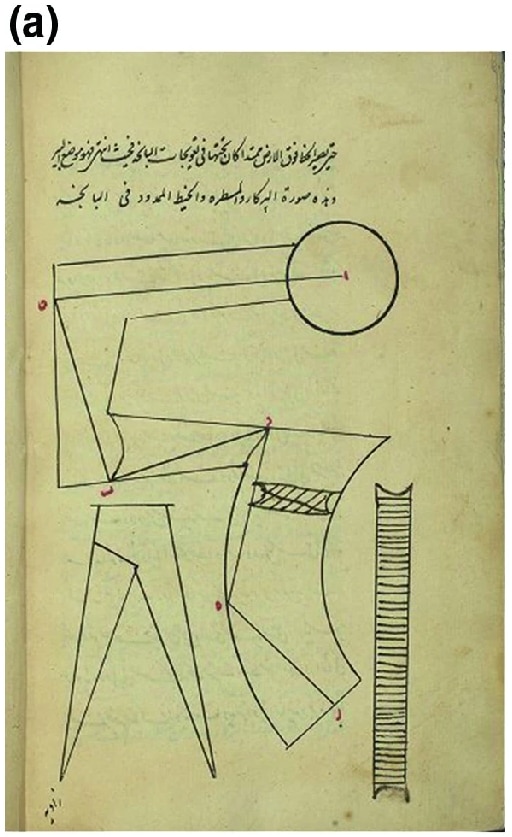
a — Page 45v – A page from The Excavation of Hidden Water by Al‑Karaji showing a diagram of an underground qanat tunnel. It explains how builders projected the tunnel’s path onto the ground surface to locate and dig the wells. The image shows a compass and ruler.
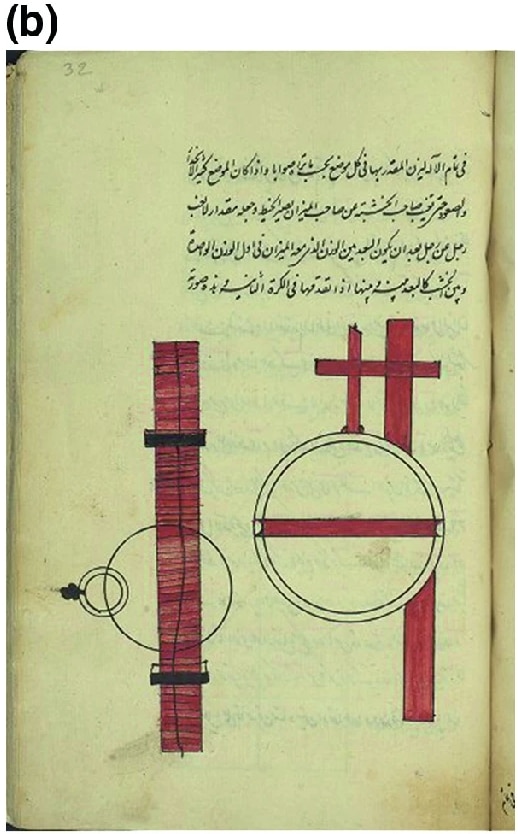
b — Page 32r – An illustration of leveling tools used for surveying the ground. This page comes from a chapter describing how to measure slopes and terrain for planning a qanat.
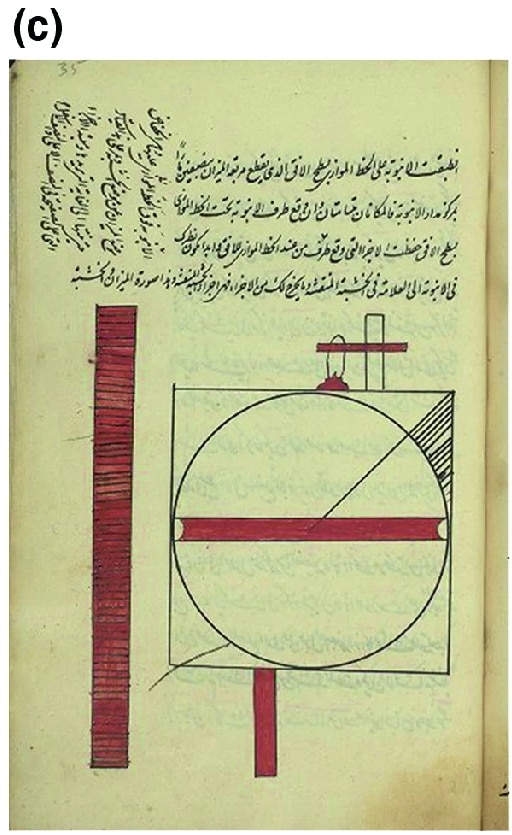
c — Page 35r – Another illustration of leveling instruments from the same chapter on surveying methods used to understand the land’s height and shape along the qanat route.
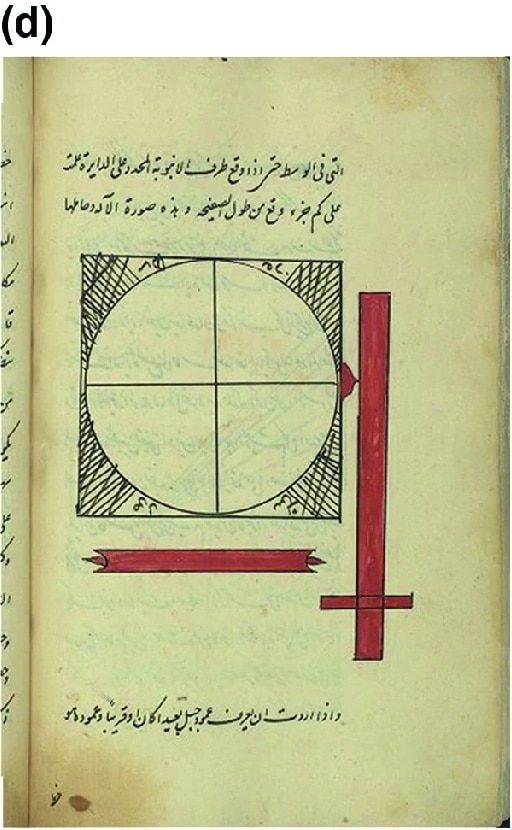
d — Page 37v – A drawing of a tool used to measure distances and heights in the landscape. It appears in a chapter explaining how to determine the height of a mountain and the distances between mountains and an observer.
Al-Karaji described this as ‘the bringing to the surface of hidden waters’,[22] a phrase that captures both the technical and almost philosophical nature of the task. He understood that water beneath the ground was not simply a resource, but a lifeline waiting to be revealed.
He also expressed a deep appreciation for the value of this work, writing, ‘I know no profession more beneficial than the extraction of hidden water, as it gladdens the earth and makes life possible.’[23] His words reflect a mindset in which engineering is closely tied to human wellbeing.
Under Islamic rule, the qanat system was not only preserved but expanded. It was introduced to new areas, adapted to different landscapes, and integrated into broader agricultural practices. In places such as North Africa[24] and Spain,[25] variations of the qanat, known as foggaras[26] and galerías, became essential for irrigation.
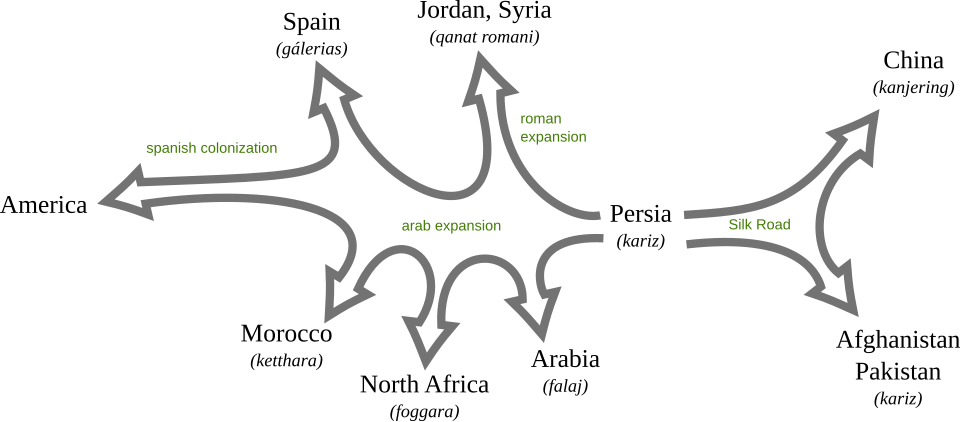
The influence even reached parts of southern Europe. In Spain, during the period of Al Andalus[27], Islamic engineers applied qanat techniques to manage water in arid regions. Elements of this knowledge later filtered into European practices, contributing to the development of more advanced irrigation and water supply systems.
Similarly, the qanat system was also introduced into parts of the Americas, particularly after the Spanish conquest in western Mexico, and related subterranean water systems are also documented in parts of Peru and Chile.[28]
Qanats did more than irrigate fields. It shaped cities and how urban life functioned. In many Islamic cities, control over water supply was closely tied to administration and governance. Access to water was not random, it was planned, measured, and regulated. As a result, religious spaces became focal points for community life, influencing the layout of residential areas and markets. The flow of water, in a very real sense, shaped the rhythm of daily life.
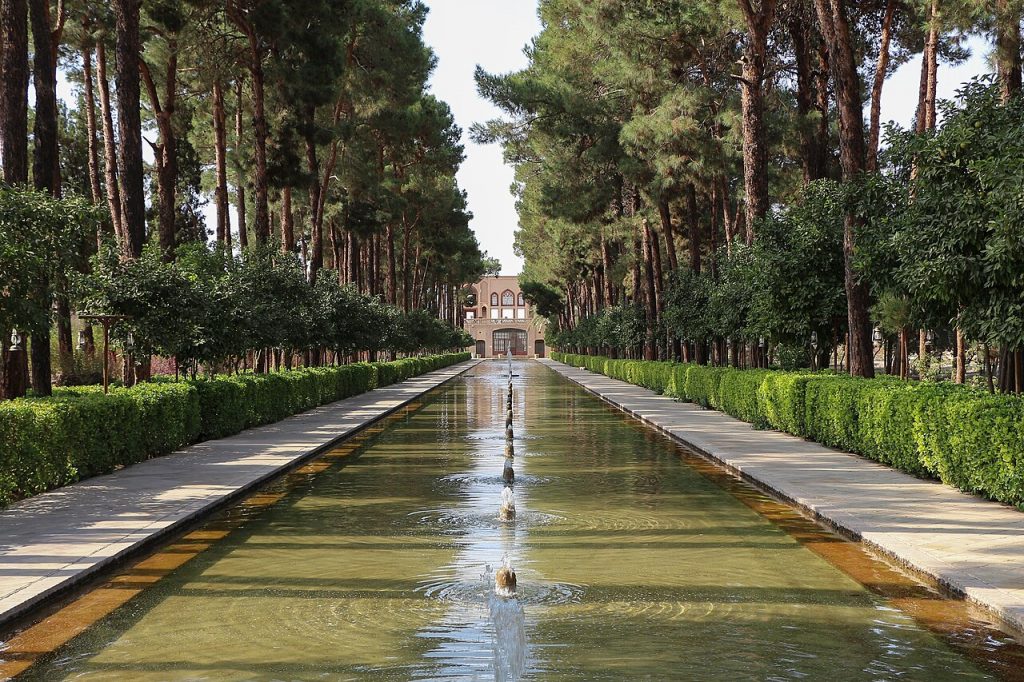
Dowlatabad Garden (Bagh-e Dowlatabad) is a historical garden in Yazd, Iran. It was listed as a UNESCO world heritage site in 2011, as part of the Persian gardens. © Wikimedia Commons
In this way, the qanat becomes part of a larger story, one in which knowledge moves across cultures, shaped by each but owned by none. It challenges the idea that scientific progress is the product of isolated civilisations. Instead, it shows how ideas travel, evolve, and connect distant societies.
It is also a reminder that technology does not always move in a straight line from primitive to advanced. In some respects, qanats outperform modern systems, particularly in terms of sustainability. They require no external energy, produce minimal environmental disruption, and operate in harmony with natural water cycles. They are, in effect, a form of renewable infrastructure long before the term existed.
Today, as the world faces growing water scarcity and climate uncertainty, interest in traditional systems like qanats is beginning to reemerge. Researchers are studying[29] how these ancient techniques might inform modern water management, especially in regions facing similar environmental conditions. The idea is not to replace modern technology, but to learn from past solutions that have already proven their resilience over centuries.[30]
This is where the story circles back to the present. The dominant narratives about Iran may focus on conflict and constraint, but beneath those narratives lies a deeper history, one that speaks of creativity, cooperation, and scientific insight. The qanat is only one example, but it is a powerful one. It shows how a society confronted with environmental limits can respond not with exploitation, but with ingenuity.
As I finished my research, I found myself returning to that initial question, what has Iran given the world? The answer, it turns out, is not always visible on the surface. Sometimes, it flows quietly underground, sustaining life, shaping landscapes, and carrying knowledge across time.
Perhaps the more important question now is this, in an age of advanced technology and escalating environmental stress, are we willing to look backwards in order to move forwards? Could the future of water lie, at least in part, in rediscovering the logic of systems like the qanat, systems that work with nature rather than against it?
The tunnels are still there, beneath the soil, still guiding water across the desert. The question is whether we are prepared to follow their path.
——————
About the Author: Musa Sattar has an MSc in Pharmaceutical Analysis from Kingston University and is serving as the Assistant Manager of The Review of Religions and also the Deputy Editor of the Science & Religion section.
[1] https://www.nationalgeographic.com/history/article/iran-qanat-irrigation-engineering-history-video
[2] https://www.loc.gov/exhibits/thousand-years-of-the-persian-book/religion.html
[3] https://mei.edu/publication/harvesting-water-and-harnessing-cooperation-qanat-systems-middle-east-and-asia/
[4] https://www.academia.edu/432605/Technology_and_religion_The_Qanat_underground_irrigation_system
[5] Dale R. Lightfoot, Qanat: Stream of Wells, (I. B. Tauris; London) 2024.
[6] Massoud, Ghaderian. ‘Collaboration Between Nature and Humans in the Desert: The Qanat System in Iran.’ Blue Papers 1, 2022;(1), 138–49.
[7] F Boustani, ‘Sustainable Water Utilization in Arid Region of Iran by Qanats,’ Proceedings of World Academy of Science: Engineering & Technology. International Journal of Civil and Environmental Engineering. (2008), Vol. 45, p213-216. https://doi.org/10.5281/zenodo.1080378
[8] Boselli, V. A., Borroni, M., Kassout, J., Houssni, M., Kettouch, A., & Cristoforetti, S. ‘Qanats: Ancient Innovations Nurturing Sustainable Futures in Water Management.’ Blue Papers, 2025;4(1), 54–64. https://doi.org/10.58981/bluepapers.2025.1.05
[9] Dale R. Lightfoot, ‘The Origin and Diffusion of Qanats in Arabia: New Evidence from the Northern and Southern Peninsula.’ The Geographical Journal. 166, no. 3 (2000): 215–26.
[10] Esmaeili, G., Habibi, A., & Esmaeili, H. R. ‘Qanat system, an ancient water management system in Iran: History, architectural design and fish diversity.’ International Journal of Aquatic Biology. 2022; 10(2), 131–144. Retrieved from https://ij-aquaticbiology.com/index.php/ijab/article/view/1515
[11] https://www.bbc.co.uk/travel/article/20180619-irans-ancient-engineering-marvel
[12] Ahmadi, H., Nazari Samani, A., Malekian, A. (2010) ‘The Qanat: A Living History in Iran.’ In: Schneier-Madanes, G., Courel, MF. (eds) Water and Sustainability in Arid Regions. Springer, Dordrecht. https://doi.org/10.1007/978-90-481-2776-4_8
[13] Mohsen Taghavijeloudar, Shiva Neshastegar. ‘Qanat, a sustainable and environmentally friendly system for water resource management in arid area.’ 5th International conference on applied researches in science and engineering. 2022, Bankok, Thailand. https://hal.science/hal-04850281v1/document
[14] https://satoyamainitiative.org/case_studies/iran-agriculture-using-underground-irrigation-canals-in-inland-dry-and-semi-dry-zones/
[15] F Nasiri, M S Mafakheri, ‘Qanat water supply systems: a revisit of sustainability perspectives.’ Environmental System Research, (2015)4, 13. https://doi.org/10.1186/s40068-015-0039-9
[16] Massoud, Ghaderian. ‘Collaboration Between Nature and Humans in the Desert: The Qanat System in Iran.’ Blue Papers 1, 2022;(1), 138–49.
[17] https://whc.unesco.org/en/list/1506/
[18] https://whc.unesco.org/en/list/1506/
[19] https://www.scientificamerican.com/article/the-qanats-of-iran/
[20] https://www.newscientist.com/article/mg14619718-600-last-of-the-well-diggers/
[21] https://muslimheritage.com/muhammad-al-karaji-mathematician-engineer/
[22] Salim T. S. Al-Hassani, 1001 Inventions, 3rd ed. (Washington, D.C.: National Geographic Society).
[23] I. Kalin, The Oxford Encyclopedia Of Philosophy, Science, and Technology In Islam. Vol 2. (Oxford: Oxford University Press, 2014).
[24] https://medomed.org/2022/the-algerian-foggara-an-ancient-irrigation-system-in-danger-of-extinction/
[25] https://english.elpais.com/culture/2022-01-06/restoring-water-channels-from-the-days-of-al-andalus-to-irrigate-modern-spain.html
[26] Wilson, Andrew. “Sterry, M., Mattingly, D. J., and Wilson, A. I. (2022). ‘Foggaras and the Garamantes: Hydraulic Landscapes in the Central Sahara’, in S. Rost (Ed.), Irrigation in Early States: New Directions (Oriental Institute Seminars 13). Chicago, 41–61.” Irrigation in Early States: New Directions, 2022.
[27] https://www.iahr.org/library/infor?pid=14110
[28] https://www.waterhistory.org/histories/qanats/
[29] https://www.sciencedirect.com/science/article/pii/S0196890425005904#s0005
[30] https://www.sciencedirect.com/science/article/abs/pii/S2352801X24002881?via%3Dihub




_07.jpg)


Add Comment