
© Shutterstock
In the arid valleys of 7th-century Makkah, food was both a necessity and a testimony to endurance. During the lifetime of the Holy Prophet (sa), the local diet was shaped by the harsh desert climate, limited agriculture, and long-distance trade.
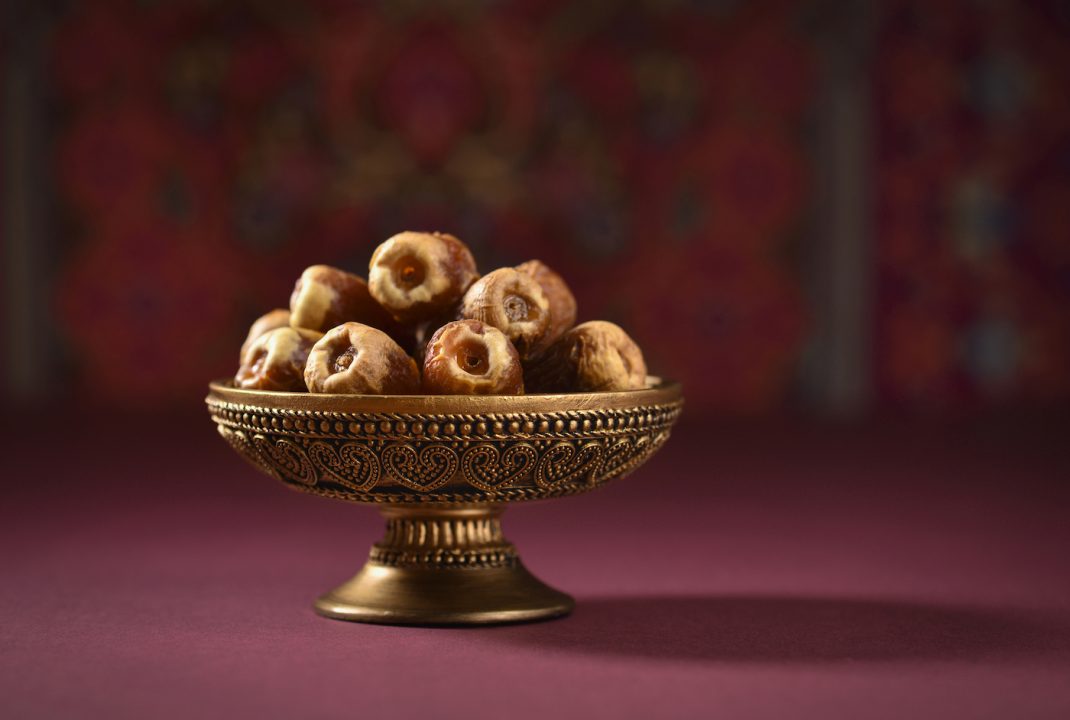
The Holy Prophet (sa) lived a life of moderation. He often broke his fast with dates and water and praised simple foods like vinegar, milk, honey, and olive oil. He seldom ate to fullness and famously said, ‘A believer eats in one intestine, while a disbeliever eats in seven,’[1] encouraging restraint and mindfulness. Meals were shared from a single dish, reinforcing bonds of brotherhood and hospitality.
His diet included meat from camels, sheep, goats, cows, chickens, and occasionally fish and rabbit. He preferred to eat the forelimbs of sheep, offal such as liver and brain, and even preserved meat soaked in vinegar or salt. Meat was usually roasted or cooked in stews, and a favourite dish of his was tharid – bread soaked in meat broth.
Soups like harisa (a meat and grain porridge), and sawiq (a dry flour of roasted barley or wheat mixed with water or dates) were staples. Barley bread was common, while wheat, which was more expensive, was eaten less frequently. Vegetables such as courgettes, onions, chard, and turnips complemented meals. Dishes like hais (a mix of dates, ghee, and curd) were practical.
Fruits, especially dates, grapes, melons, and figs, were widely eaten, and camel, goat, and sheep milk provided essential nourishment. Eggs, curd, and fermented dairy were also part of the daily staple.
With Makkah’s limited agriculture, the city relied on trade. Caravans brought wheat and dried fruits from Syria and Egypt, oils from Ta’if, and dates from Madinah and Khaibar.
ENDNOTES
1. Sahih al-Bukhari, Hadith 24.
Add Comment