
ٱللَّهُ ٱلصَّمَدُ[Allah al-Ṣamad] – Ṣamad refers to that Being Who does not depend on anything or anyone else, but all things are dependent...
The Holy Qur’an

للّٰهُ الصَّمَدُ Allah is the Being upon Whom everyone is dependent (but Who is not reliant on anyone) Key Word Analysis الصَّمَدُ: السَّيِّدُ...
Commentary of Qul Huwallāhu Aḥad As already explained in the commentary of Sūrah al-Lahab [the previous chapter], the Holy Qur’an’s subject...
هُوَ – huwa [He]: Huwa is an إ سْمُ ضَميرٍ [ism ḍamīr]; that is, huwa is a singular, masculine, third...
There are three types of narrations pertaining to the occasions and circumstances of revelation of this Sūrah. The first narration is that the polytheists of...
The Holy Prophet (sa) has declared this chapter to be one-third of the Qur’an. Thus, he has stated: ِ”مَنْ قرَأَ قُلْ هُوَ اللّٰهُ أَحَدٌ...
A number of names have been cited for this chapter in various commentaries of the Holy Qur’an. These numerous names are indicative of the vast nature of its...
سُورَةُ الاِخْلَاصِ مَكِّيَّةٌ وَهِيَ خَمْسُ آيَاتٍ مَعَ البَسْمَلَةِ Sūrah al-Ikhlāṣ is Makkan and including Bismillah, it has 5 verses. (1) According to Ibn...
The Review of Religions is delighted to present the complete English translation of the commentary of Sūrah al-Ikhlāṣ – Chapter 112 of the Holy Qur’an – by...
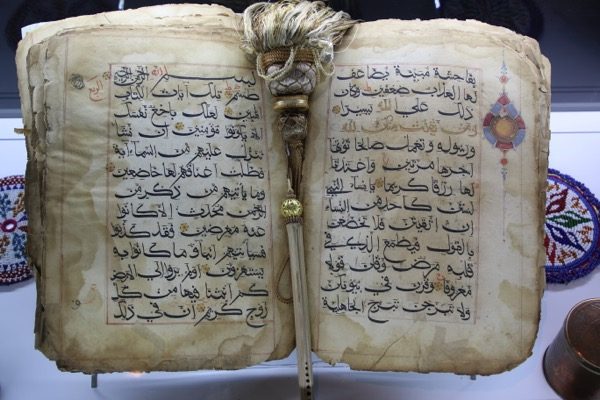
Islamic calligraphy is on of the most venerated forms of calligraphy and is considered to be the pinnacle of Islamic art. The Al-Qalam Project reignites this...
Commentary of the final verse of Sūrah al-Falaq is presented in this edition.
Commentary of Verse 5 of Sūrah al-Falaq from The Holy Quran.
The lexical analysis of verse 5 of chapter 113 of the Holy Qur’an.

EXCLUSIVE SERIALISATION We proudly present the first full English translation of the commentary of Chapter 113, Sūrah al-Falaq, by Hazrat Mirza Bashiruddin...
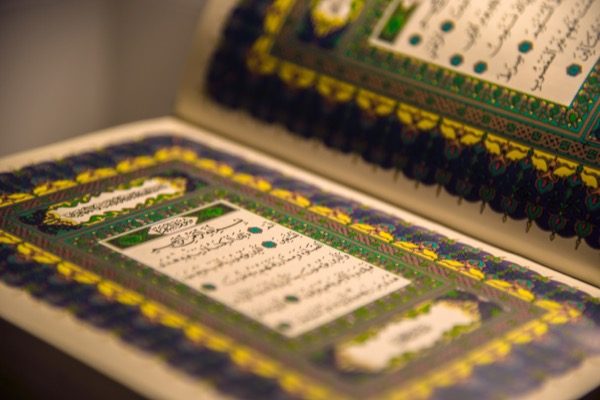
In this edition, commentary of verse 4 of Sūrah al-Falaq begins.